Showing posts with label 80-89. Show all posts

Wednesday, September 19, 2007

Music: The White Stripes - Icky Thump

The White Stripes
Icky Thump
[Rock]


Ever since the follow up to runaway success "Elephant", "Get Behind Me Satan", defied expectations and split opinions, all eyes focused on Detroit blues-rockers The White Stripes to see what direction they'd go in next. The answer; a partial climbdown. New album "Icky Thump" may feature many an experimental element, but it's closer by far to the stripped down garage rock of "Elephant" than the wild experementalism of "Satan"'s marimba, bluegrass, backward drum loops and thirty second tracks.

Oddly, title track opener and lead single "Icky Thump" is one of the most adventurous pieces on the record; although it's driven by the kind of raucous, righteous guitar lick and atypically political lyrics ("White Americans, what, nothing better to do? / Why don't you kick yourself out, cos you're an immigrant too") that propelled it, somehow, to number two in the charts. Second single "You Don't Know What Love Is (You Just Do as You're Told)" marries some witty, satisfying lyrics to a more conventional musical structure, making it a more obvious choice of single. It's only by third track, "300 mph Torrential Downpour Blues" that you get the slightest feeling you've heard it all before; could the Stripes be falling into a rut? Thankfully, a tremendously bombastic version of "Conquest", complete with spanish horns, reassures that the will to dabble is still theirs. "Bone Broke", unfortunately, is really a very archetypal White Stripes song, with little to distinguish it from many others; thumping monosyllabic drums and Jack's impassioned screeches. "Prickly Thorn, but Sweetly Worn" however, twists the listener back into a world of surprises; this time they drag out the pipes for what sounds like a scottish folk song. It's followed by a short snippet of experimental nonsense, more self indulgent outro than song, entitled "St. Andrew (This Battle Is in the Air)"; a mercifully short bout of Meg talking about not very much over increasingly erratic music. Then it's back to the classic approach for the rest of the album; "Little Cream Soda" is perfectly serviceable. "Rag and Bone" provides a pleasant surprise and personal favourite as Jack and Meg summarise their philosophy as musical recyclers by literally masquerading as rag and bone collectors. Then for the last four tracks, the band alternates between two strident, adrenaline filled jams ("Catch Hell Blues" and "I'm Slowly Turning Into You"), and the sweet, quiet, ballad "A Martyr For My Love For You" which is complimented by the satisfying closer "Effect and Cause"; suberbly constructed lyrics about a well known fallacy which dovetail into a love story of sorts. This is not an album which matches "Elephant"'s consistency or "Satan'"s spirit of adventure; in fact, the best word to describe it is "Solid". Solid songs, solid construction, solid lyrics, solid musicianship, solid Stripes.

80

Tuesday, July 17, 2007

Music: The Field - From Here We Go Sublime

The Field
From Here We Go Sublime

[Techno]


Three quarters and forty-five minutes into Axel Willner's first full-length recording, I found myself faced with the rarest of questions: could this be a perfect record? Not just a solid album (where well-polished pleasantries sneak by, polite and unassuming and unspectacular: think Antics, Transformer or Revolver), but an album where each song is your favourite song of the year, where each song fills you with a kind of unbridled, childish glee, where each song just works?

And then, just as I was beginning to believe, the thing collapsed in on itself, delivering three successive sour notes, one after the other, bringing From Here We Go Sublime's almost indefatigable momentum to a stunning anti-climax. Bang, bang, bang. Nice try. Better luck next time.

Repeat listens both reassured and disappointed; Willner (a.k.a. The Field) has indeed crafted an album's worth of gorgeous, minimal techno with the first seven songs, only to have gone and spoiled the fun by cluttering the mix with a final, unnecessary three. Given the breathtaking simplicity of his technique - electronic and voice samples, sliced and diced and looped, over and over and over, set to the simplest of beats - you'd have thought overcrowding the least of his worries, but alas not. The result? Willner only has himself to blame for 2007's most frustrating listen.

However, as frustrating listens go, From Here We Go Sublime must surely rank among the most satisfying. Opener 'Over the Ice' slips and slides with remarkable grace, peaking and subsiding innumerable times during seven seemingly short minutes, as blissfully urgent as a hurried hallucination. As with much of Sublime, it sounds like something you should be able to knock up on Pro Tools in half an hour, but at the same time you know you just couldn't resist slotting in an extra hi-hat here or another bass-line there. To strip music down to its bare essentials is any genre is a risky business, but to do so in modern electronic music, post-James and -Jenkinson, is verging on suicidal. Somehow, Willner pulled it off.

'A Paw in My Face' then resumes the steady momentum for a patient minute, before soaring skywards as the beat strengthens, synth textures sweep in from acute angles and a clipped guitar sample provides the first glimpse of melody. A predictable crescendo involving all three arrives, lights flashing, after four minutes, but the sheer bliss of the moment is so overwhelming that any sense of over-familiarity is quickly forgotten.

Though the opening pair are excellent, by far the strongest track on Sublime is sixth song 'Silent'. Gradually climbing to an anthemic peak from a steady, beat-driven birth, its wispy "ooh-oohs", astral swirls and progressively hardening drums combine for a truly transcendental experience, like the fitter happier cousin of the Velvet Underground's 'Heroin'. Music this beautiful, this ethereal, this...colourful is just so hard to come by.

Elsewhere, 'Good Things End' is perhaps the most club-ready track on offer, rumbling with a muffled, skittering beat and warmly cushioned by frequent ripples of lush background noise. 'Everday' is epileptic and chilled in equal measure, surfing a sea of snappy, erratic clicks and a soothing vocal loop, while 'The Little Heart Beats So Fast' grooves under and over suggestive gasps. 'The Deal' is the record's ten minute centrefold, a brooding, atmospheric piece built around an obtuse wall of interlocked shifts, taps, groans and howls. It's Sublime's deepest and most rewarding track, and would have served as a useful end to the record had Willner opted to quit while he was ahead.

As it is, we're left with 'Sun and Ice' (a weak wave of candy floss white noise which fails to invigorate), 'Mobilia' (Willner's doomed attempt to do something a bit odd) and the pithy title track to close the album with a confused, dull whimper; a certain album of the year becomes a sure-fire top ten fixture. Oh Axel, you had us all going for a minute. 87

Tuesday, July 10, 2007

Games: GSC Game World - S.T.A.L.K.E.R. Shadow of Chernobyl

GSC Game World
S.T.A.L.K.E.R.
[First-Person Shooter/RPG]


The Plot: after a second incident at the Chernobyl Nuclear Power Plant in the Ukraine, disparate groups of stalkers have flocked to the area following rumours of valuable artefacts spread all around the area. One stalker is found, alive, among a pile of corpses, and is brought to a nearby trader who sets him up for a life in The Zone. A single objective remains on his old PDA: “Kill Strelok”.

I first saw a trailer for S.T.A.L.K.E.R. Shadow of Chernobyl five years ago. At the time, I found the level of detail exhibited by GSC Game World’s nascent X-Ray engine to be scarily realistic, not least because back then, in 2002, real-time dynamic lighting and accurate physics were a big deal. Now, four years after Half-Life 2, wobbly chairs and breakable lights only raise an eyebrow when not included in the latest game. Even the once-formidable promise of a large, fully-interactive, living and breathing land-mass now fails to excite in the wake of games like Oblivion.

Arguably, however, Sergiy Grygorovych and his team only have themselves to blame for the problem; the game, blighted by countless delays, was released years overdue. And, like many games infamous for being delayed, it is chaotic, confused, at times disastrous and often hopelessly overambitious. Yet, in spite (of perhaps because) of all its flaws, Shadow of Chernobyl is one of the best PC games in a long while.

Given their sheer volume, attempting to list all of the game’s deficiencies would be a futile exercise. However, a few are nevertheless worth noting. Technically, it is a complete dog’s breakfast, stuttering erratically and frequently to load extra details during gameplay. Even on lower settings, it was almost possible to hear my computer groaning under the pressure of managing the 30,000+ objects active during a game. Additionally, the in-game currency system is pretty useless, not only because they player will gather more than enough money through the course of the adventure to buy out all of the businesses in The Zone twice over, but also because a powerful enough arsenal can be acquired without ever visiting any of the game’s three merchants (more than anything else it reminded me of the similarly flawed system in the Grand Theft Auto series). Thirdly, the end of the game was clearly rushed, and has suffered for it. What I thought to be the final third of the game turned out to be a manic half-hour dash through the final three maps, which were cluttered with so many enemies that the only viable option was to dump almost all of my kit, jam the sprint key and run like the wind for a couple of miles. When compared to the carefully-considered, brooding menace of the early stages, it felt shallow and unnecessary.

It is also one of the most unpolished major releases in a while, shipping with a plethora of aesthetic errors (poor translation, broken objectives) and graphic misdemeanours (bad clipping, disappearing corpses). However, if you’re anything like me, you’ll enjoy the ramshackle production and sharp edges which, as previously witnessed in Operation Flashpoint and Deus Ex, lend the game a rare humanity in a format largely characterised by dismal sterility. Dare I say it, if ever there could be a punk approach to video game development, Shadow of Chernobyl’s rough and ready, distinctly three-chord approach is as close as you’re going to get.

“So,” you may rightfully inquire, “why is it so great?” Well, it is so, so, so great because, first and foremost, it is a significant artistic achievement. As far as I can recall, no development team has ever attempted to set a 3D game in or around the Chernobyl power plant. However, GSC Game World’s creation is stunningly imaginative, engrossing and believable. From the deserted outer reaches of the Cordon and Garbage areas, to the unhinged claustrophobia of the underground ‘X’ laboratories, to the diseased swaps of the Yantar region, to the sharp undulations of the Red Forest, to the numb emptiness of the neighbouring city, Pripyat, to the oppressive gloom of the plant itself, each of the areas is a notable feat. Even more standard locations like the Army Warehouses and the Agropom Research Institute possess character, successfully managing to avoid the dreaded cut ’n’ paste fingerprint of professional editing software.

What is perhaps most impressive of all about the environments, however, is the noticeable lack of contact the player is likely to experience. At times, for example, it is possible to explore the ins and outs of a complex base without encountering a soul. As such, it would seem as though the levels were constructed without the usual confines of “an explosive barrel here” and “a sniping position there” that often plague less free-form shooters. That said, the level of detail is still incredibly high throughout, with supplies hidden away in the most unlikely (and often unreachable) of places, meaning each location is worth exploring thoroughly.

Did someone say exploring? Shadow of Chernobyl is certainly a sizeable game, with a potential lifespan of thirty hours if the entire array of secondary missions is attempted. Though I’m not a believer in the much-cited proportionality between the length of a game and its merit, this world is one which most players will be compelled to lose themselves in.

Another impressive feature of the game is the self-sustaining nature of the environment. AI stalkers will explore, jostle for territory, fight mutants, pick up and drop equipment and congregate around camp fires, all of their own accord, again helping to reinforce the authenticity of the absorbing atmosphere. Moreover, the first time I witnessed a fellow survivor strumming an incongruous thread of chords on a bruised guitar was, to say the least, a particularly memorable moment.

Shadow of Chernobyl also presents an interesting moral dilemma worthy of discussion. At the beginning of my journey as the mysterious (anti-)hero known only as “The Marked One”, I was almost too scared to move. Whether that was due to the lack of constraint, the dearth of supplies, the lack of allies, the hostility of the environment (as well as radioactivity, the player must avoid ‘anomalies’ - large, often invisible environmental entities spewing fire, lightning and so forth) or another, unseen factor, I’m not entirely sure. What was certain, though, was that I was dizzy with relief every time I managed to make a new friend or get my novice hands on bullets and bandages. Hell, even a processed sausage was treasure. By the end of the game, however, tanked up with the best weapons and equipment and all but invincible to small arms fire, I found myself executing random stalkers at will, at times even wiping out entire groups just because I could. Not only is the changing power structure of the world interesting to experience first hand, it also gives the player a real sense of satisfaction as previously challenging areas which saw The Marked One ducking for cover can later be used for a relaxed, early morning stroll.

Speaking of the dawn hours, Shadow of Chernobyl also features a fully-functional day/night cycle, with each ‘day’ lasting around two hours in real time. This leads to the occasional late night jaunt in low visibility which, at times, is almost as terrifying as the edge-of-seat madness encountered in the aforementioned ‘X’ laboratories; if you thought the tension in Oblivion’s underground caverns was unbearable, wait until you’re being stalked through a pitch-black death trap by a seven-foot, sprinting, invisible Bloodsucker while being pelted with boxes and barrels by an equally invisible (and seemingly invincible) Poltergeist.

Considering how seriously you take your guns, the best feature of Shadow of Chernobyl may in fact be the impressive ballistics system. Early pistols look and feel like pea shooters - pathetically weak and horribly inaccurate - while some of the high-tech gear encountered towards the end of the game (including a grenade launcher, an RPG, and a rail gun, no less) can rip anything to shreds at a hundred paces. None of the guns have their real-life names but, considering the confidence boost attained when wielding some of the more arcane, shrapnel-spitting beasts, that’s probably a good thing.

With such a plethora of impressive traits - some of them ground-breaking (the art direction, the chilling atmosphere, the adaptive AI) and some of them just very well done (good guns, good role-playing elements, good story) - it is a great shame that Shadow of Chernobyl is prevented from entering the realm of all-time greats on a handful of niggles. The technical and production issues are incidental, neither major nor hugely noticeable, but for me the end sequence is incredibly disappointing and, to a degree, undermines the impression left by such an accomplished and harrowing vision of the near future.

Nevertheless, Shadow of Chernobyl remains a valuable comment on the material focus of our times. By exposing the ills of a world where driven treasure hunters look for property in the wilderness, a world of rigid structures where those with the most goods rule the roost and a world where making as few enemies as possible is a major priority, GSC have provided a formidable allegory for twenty-first century culture. 88

Saturday, June 30, 2007

Music: Porcupine Tree - Fear of a Blank Planet

Porcupine Tree
Fear of a Blank Planet
[Progressive Rock]


For a band with such a varied and impressive track record, Porcupine Tree’s rise to mini-stardom in 2005 was ironic for two reasons. Firstly, that year’s Deadwing was among their weakest recordings, for once finding the band struggling to pin down a distinct sound and thus resulting in an inconsistent and, in places, distinctly mediocre album. Secondly, despite the fact they had been gradually building their fan base with a decade’s worth of hugely ambitious, multi-layered, mostly wordless soundscapes, the only reason the Deadwing received any attention at all was down to the four minutes of pop perfection in lead single ‘Lazarus’. They had, in effect, become recognised through of a lack of ambition (who’d have thought it?), something they are clearly looking to redress with Fear of a Blank Planet - their most obtuse record since 1996’s career-defining masterpiece, Signify.

Although their latest effort does retain elements of Deadwing’s tighter, heavier sound, it is more closely related to their earlier records, featuring longer, more free-form songs (the shortest of the six is five minutes long), a greater emphasis on texture (rather than melody) and some very strong instrumental pieces. Fear of a Blank Planet is also another concept album, though unlike Deadwing’s vague connection to a Stephen Wilson film project that has subsequently been shelved, the narrative here helps to expand rather than restrict.

Imagining an apathetic, culturally sterile near-future, each of the songs is a document of depression as the band attempt to uncover the reason for such a decline. Television and video games are predictably the easy target (“The flicker of the screen / I’m basking in the shit flowing out of it”), however other, less obvious factors are also explored. For example, the nature vs. nurture debate, society’s desire to medicate, the role of the media, loveless sex and childhood alienation all feature prominently, though never to such an extent that the listener is denied the opportunity to make up his or her own mind. Considering Wilson’s sketchy lyrical past (see ‘Hatesong’ for a good cringe), it is certainly encouraging to see him engaging on a more intellectual level and attempting to achieve the same proficiency with words that he has so often exhibited with a guitar.

Continuing the band’s habit of excellent artwork, the accompanying booklet is laden with creepy images of ‘blank’, seemingly soulless children staring right out of the page, lending extra weight to the apocalyptic theme and helping to tighten the overall concept.

Though technically consisting of six songs, Fear of a Blank Planet is essentially a single piece of music split into six different sections, imploring the listener to listen for the duration rather than dip in and out for a short fix. Though this could have failed spectacularly and resulted in the record rapidly gathering dust, the music is more than strong enough to warrant fifty minutes’ attention.

The title track kicks things off nicely, opening with a gently picked guitar and uptight drums before multiple key changes, lots of reverb and cosmic vocals combine to give it a brutal, tempestuous surge. Aesthetically it is very similar to Deadwing’s fantastic titular piece, though it just about emerges victorious with the sheer weight of its gravitational pull, ever threatening to implode, ethereal yet dangerous.

Such an aural rush inevitably requires a lengthy comedown, and one is helpfully supplied in the form of ‘My Ashes’ - a chilled-out, effortlessly bliss number that takes its time and refuses to be rushed. Mainly musing on life’s regrets (“And my ashes find a way beyond the fog / And return to save the child that I forgot”), Wilson has crafted a ballad on par with some of his best work. Though not quite equalling the sinister majesty of ‘.3’ or the heart-rending candour of ‘Stop Swimming’, its carefully measured guitar and keyboard verses and pounding string crescendos would certainly not pale in their company.

The best is still to come, however, with the ridiculously long, ridiculously overblown and ridiculously ambitious eighteen minutes of ‘Anesthetize’. Attempting to describe its musical construction would be like trying to understand the plot of Inland Empire - a pointless and unnecessary endeavour - but, suffice to say, its like ‘Bohemian Rhapsody’ on speed and methadone, shaken up, left to stew and multiplied by infinity. It is the type of song that reveals something new with each listen, cannot fail to excite even the most ardent cynics of prog and, one feels, the type of song Porcupine Tree wanted to show the world they could make. Having now achieved a measure of fame, the desire to experiment appears to have recaptured Porcupine Tree’s imagination and, at times, sees them hurtling above and beyond the imposing peak of ‘Voyage 34: Phase 1’ which, for over a decade, has been the band’s defining, and greatest, achievement.

The fourth song then continues the album’s impressive form, consisting of some free-form drumming, pleasant guitar strums, sweeping soundscapes and more of Wilson’s breathy melancholia. The title of ‘Sentimental’ perhaps doesn’t do the song justice, pre-empting a clumsy whine while the content, in actual fact, thoughtfully considers the surreptitiousness, inevitability and accompanying misery of the ageing process: “Sullen and bored the kids stay / And in this way they wish away each day”. Admittedly, ‘Sentimental’ never attempts to be in the same league as its predecessor, but it is nevertheless solid and, though by itself nothing special, is holistically valuable, adding to rather than detracting from the formidable first half.

However, either because of or in spite of the first two-thirds’ impressive strength, the final two songs are something of a disappointment. ‘Way Out of Here’ suffers from characteristics often (wrongly!) said to correlate with progressive rock - that is, it is a formless, dull and forgettable mess, unlikely to please newcomers to or veterans of the genre. Closer ‘Sleep Together’ is a little better, beginning menacingly enough with refrained, earthy drums and some electronic squiggles before being swamped by a horribly conceited and unnecessarily brash chorus that really saps the verses of any potency; think ‘A Design for Life’ or, more recently, any Muse song.

Following in Deadwing’s footsteps, Fear of a Blank Planet again resists Porcupine Tree’s previous habit of producing either 5-star records (Voyage 34: The Complete Trip, The Sky Moves Sideways, Signify, In Absentia) or absolute musical monstrosities (Stupid Dream, Yellow Hedgerow Dreamscape). However, whereas the former was bona fide mediocrity, the group’s latest effort is a four-and-a-bit-star case of the almost great which can nevertheless be proud of itself. In strict mathematical terms, four and a half good songs out of six equals a solid seventy five; however, given the mind-blowing brilliance of ‘Anesthetize’ and my long-standing support of the band, I’m inclined to be a little generous.
81

Monday, May 14, 2007

Music: The Arcade Fire - The Neon Bible

The Arcade Fire
The Neon Bible
[Rock]


Before getting into a review of The Neon Bible - The Arcade Fire’s second, epic, multi-instrumental showpiece - I ought to get something off my chest. Alternative and mainstream musicians alike have been relentlessly fetishizing the Iraq war for over four years now, ceaselessly bombarding us with details of how much they hate Bush and why the war is wrong, more often than not with toe-curling clumsiness. A quick glance at the lyrics on The Neon Bible suggests this trend is set to continue, with choice snippets including:

“Mirror, mirror on the wall / Show me where the bombs will fall”

“You’re still a soldier in your mind / Though nothing’s on the line”

“Working for the church while your life falls apart”

“Hear the soldier groan / We’ll go at it alone”

“Now the war is won / How come nothing tastes good?”

“Don’t wanna fight in a holy war / I don’t wanna live in America no more”

Don’t get me wrong, I’m more than happy with fuzzy Oberstian metaphors (see below), but preaching this heavy-handed is, quite frankly, rather off-putting. Whereas The Arcade Fire’s majestic debut Funeral focused mainly on human relationships and was underscored with some heart-wrenching arrangements, here Iraq - so often the reserve of the floundering lyricist - is the dominant theme.

It is also no surprise to learn, then, that some of the most successful songs on the mostly successful The Neon Bible hark back to older days. Live favourite ‘No Cars Go’ has been hanging around for some time now and, rather than lingering like a bad smell, the aura of Funeral gives it a definite sweetness. You know the score - drums, accordions, strings and trumpets swim together effortlessly as Win Butler and Régine Chassagne lay down their manifesto with dizzied yelps: “We know a place where no cars go / Between the click of the light and the start of the dream…women and children, let’s go!” Its six minutes manage to recapture the relentless momentum of ‘Rebellion (Lies)’ and ‘Power Out’ with the closing, choral-backed instrumental burst being particularly impressive.

Also recalling past glories is the first ninety seconds of two-part blockbuster ‘Black Wave / Bad Vibrations’, an irresistibly charming, bi-lingual, percussion- and voice-led shimmer awash with the childlike enthusiasm of Régine and Sarah Neufield. “We’ll make it if we run / Run from the memory / Je nage, mais les sonts me suivent” they sing, shedding light on the other recurring theme of the record: water.

For some reason or another, very possibly climate change (the new Iraq?), The Arcade Fire are obsessed with the seas, swimming, drowning, being submerged and other water-related peculiarities on The Neon Bible. It is certainly a commendable fixation, arguably best explored on the apocalyptic ‘Windowsill’. A Kaczynskian denouncement of recent human ‘advances’, it defiantly resists the urge to comply while a sinister, plucked guitar dangles menacingly: “Don’t want it faster, I don’t want it free…Don’t wanna give ‘em my name and address / Don’t wanna see what happens next…’Cause the tide is high and it’s rising still”. After a couple of combustible minutes the song finally surfaces as strings come in, the voices get a bit shakier and crescendos abound, all while the line “Don’t wanna see it at my windowsill” is wailed by every member of the septet for a considerable duration. Gloomy stuff, non?

More of the see-through stuff comes in the baroque thump of lead single ‘Black Mirror’ (“I walked down to the ocean / After waking from a nightmare”), the guitar-heavy ‘The Well and the Lighthouse’ (“So down I fell into the water black”), the brooding whisper that is ‘Ocean of Noise’ (“In an ocean of noise / I first heard your voice”) and the more up-tempo, poppy number ‘Keep the Car Running’ (Can’t swim across a river so deep”). While never becoming dull, the over-reliance on the water theme does draw attention to some fleeting references to the band’s more interesting politics. Even though I disagree with both of the bands other messages - abortion is indefensible (“Now who here among us still believes in choice? Not I”, “Why did I take the pill?”), the state should get lost (“Shot by a security camera”, the name and address reference in ‘Windowsill’) - it is encouraging to see such directness from the, Iraq aside, seemingly depoliticized mainstream indie scene.

Though the aforementioned tunes see The Arcade Fire in the steady, 8/10 mode they have seemingly mastered so easily, The Neon Bible’s two standout tracks see the band move into a different gear altogether. Essentially a hymn, fourth song ‘Intervention’ has, fittingly, music to die for. Starting with bone-chilling organ chords, strummed guitar and occasional brushes of the humble triangle, the stage is certainly set for a stunning song. After a couple of minutes drums and strings flesh it out further, before the choral shrieks of Régine and Sarah are again put to good use. It is such a great shame, then, that much of the song’s lyrical content is focussed on you-know-what. For such a spellbinding musical achievement, however, I’m willing to overlook some of the words. In any case, Win delivers them with such teary-eyed vulnerability that he could be singing about toothpaste and still be assured of shivers down spines.

The other highlight of The Neon Bible is the band’s grandiose rant against anything and everything, ‘[Antichrist Television Blues]’. Though it could be argued that the brackets aren’t exactly essential, the song itself is, bringing together everything that has so far made The Arcade Fire a household name: angelic, undulating backing vocals; Win getting angry; a toe-tapping guitar and drum progression; strings on demand; crescendos and refrains in equal, innumerable measure; unashamed Biblical overtones; someone attacking a piano. If this is The Arcade Fire by numbers, I for one will keep score.

The only obvious sour notes on The Neon Bible are the two minutes of underwhelming, plodding title track and momentum-sapping concluder ‘My Heart Is a Cage’. While the former is undoubtedly a poor song, the latter may have worked if not placed after such a tailor-made album closer in ‘No Cars Go’. As it is, I could do without it.

Aside from those two missteps, The Neon Bible is an exceptionally strong album musically. It could be better lyrically, but then that would be like asking Bob Dylan to go a bit faster or telling Beastie Boys get a bit more serious. The OK Computers, Marquee Moons and If You’re Feeling Sinisters of this world are few and far between and, while The Arcade Fire are prone to the odd ham-fisted or clichéd observation, they are first and foremost an exceptional musical outfit. For that, and perhaps that alone, we should be very grateful. 84

Games: Square Enix - Final Fantasy XII

Square Enix
Final Fantasy XII
[Role-Playing Game]
Square Enix’s Final Fantasy series is, arguably, the reason Sony has managed to maintain its lead in the console market all these years. While Nintendo’s steady demise was instigated by a mixture of self-inflicted design flaws (cartridges instead of CDs, that controller) and catalysed by a weak selection of killer titles (Zelda, Mario, Goldeneye and…um…a Resident Evil remake), Microsoft’s Xbox has earned itself a considerable fan base. And with the Playstation’s increasingly reliable Grand Theft Auto series defecting, it looked at one point as though Gates and friends were going to take the lead.

Alas it was not to be, however, and it appears the reason many have resisted the urge to invest in a 360, disk scratching issues notwithstanding, is the wait for the much-anticipated twelfth installment. Just to put the series’ popularity in perspective, Final Fantasy X sold five million copies (making it one of the twenty best selling video games of all time), and was recently voted the Japanese public’s favourite game of all time in Famitsu. Even the game’s short, rushed, confused and nonsensical semi-sequel, Final Fantasy X-2, managed to shift three million units worldwide. Now that’s what I call market influence.

And thus we come to the inevitable question – has the five year wait been worth it? In short, yes. All the main Final Fantasy titles come with hours of game time and tons of side quests, making them, if nothing else, excellent value for money.

However, one of the main issues I had with FFX was a worryingly Kojima-esque trend to make the game as much like a movie as possible. Cutscenes positively littered the first ten hours, suffocating any sense of momentum and introducing us to some of the most unlikable characters yet seen in the series. Thankfully, the whole experience lasted in excess of 150 hours, making the initial slog forgivable in the context of an (eventually) well-realised, pleasantly convoluted story, the series’ best combat system and an obscene amount of extras.

Despite the aforementioned strengths, though, it was all a bit too serious for my liking. Sure, there were mini-games aplenty, but accompanying them was a distinct lack of the quirky Asian humour fans have come to love. Like FF8, it was all a bit too whiny and self-important, crucially forgetting that, in a nutshell, it was still a traditional RPG where players loot villages, kill dragons, cast spells and adventure in tightly-structured manner.

Thankfully, the team at Square Enix appears to have acknowledged the series’ limitations and opted for a much more light-hearted approach in FFXII, the last of the series to be produced for the current ‘generation’. It could be the race of bunny girls, the tigers with Indian accents or the alligators hailing straight from the streets of Kingston (or even an interesting combination of all three), but the game’s wackiness is sure to please even the most hard-nosed of gamers.

Instead of the (admittedly compelling) life and death musing from the last game, the plot has been toned down somewhat and is, to put it mildly, extremely basic. And this is surely a good thing, given the more free-roaming nature of the game. Fortunately, that doesn’t mean another urban crime-’em-up, though, just that the game takes place in a world which is fully traversable. A happy medium has been struck between the fully open-ended world maps of the earlier games and FFX’s disjointed, menu-accessed locations and, while this does mean the player can potentially wander into level sixty monsters in the first hour of play, it’s a risk worth taking when recalling the horribly claustrophobic kingdom of Spira.

One obvious downside of the new approach is that, at times, the story’s grip on the player can tend to loosen. For instance, the player can partake in a number of optional monster hunts that, if attempted immediately, provide a satisfying challenge. These hunts can take up to an hour of game time to complete and, considering that up to five may become available at once, some involve puzzle solving and a handful are punishingly difficult, it’s easy to see how Vaan’s tale can become lost in the wilderness. That said, the plot is essentially this: an evil man is doing something evil that will enable him to rule world with an evil hand and must be stopped because he’s evil, so it’s pretty easy to get back on board after some voluntary questing.

The new combat system, taking place in real-time without a transition between exploring and battle modes, has attracted much attention, but it really isn't that much of an improvement. Instead of the more tactical and lengthy battles veterans have become accustomed to, battles mostly take the form of a three-pronged charge and lots of sword swinging (handled automatically by the 'gambit' system). You might get the odd bit of magick cast here and there, but why bother when you can defeat most enemies in half the time with simple physical attacks and the occasional cure spell?

Boss battles are notably poor, especially with the bigger foes; for the length of some fights, the restricting over-the-shoulder camera perspective shows two of our heroes chipping away at a pair of feet while someone off-screen is getting slowly beaten to death. Also, the inclusion of 'quickenings' – super special combo attacks that can annihilate some bosses in a single hit – is also extremely questionable.

And forgive me if this sounds a little picky, but is there actually a difference between wandering around an area fighting random battles and exploring a dungeon fighting battles against randomly placed enemies? Newcomers to the series (or console RPG gaming in general) often bemoan the random battle culture, and the developers have clearly listened to this voice, opting for a system which is aesthetically modern and highly simplified, but whose bare bones are essentially unchanged. While this could have led to them pleasing both sets of fans, I fear it has the potential to backfire and satisfy no-one.

Putting all the criticism in perspective, however, it would be wrong to suggest that FFXII is one to avoid. It is suitably epic, charmingly quirky, stuffed with content, polished to perfection and, for the first time in a long time, has some highly memorable characters and great dialogue. Even the noticeable flaws and abrupt ending to the story fail to prevent it from being a quality title, though it's far from the masterpiece that some will inevitably claim it is. In a similar vein to FFIX's role before FFX, FFXII is clearly acting as a stopgap before the star-spangled next-gen onslaught of FFXIII, but it's no doubt one that's sure to rake in the cash.

In a nutshell, FFXII is well worth a purchase. Well, unless you're on a tight budget, in which case buy Dragon Quest instead. 80

Wednesday, January 31, 2007

Music: The Decemberists - The Crane Wife

The Decemberists
The Crane Wife
[Chamber Pop / Indie]


Everyone's favourite Dickensian indie urchins return with a typically strong set of songs. Whilst all their staples (antiquated crime, exotic locales, wordy lyrics) remain in force, right from the opening they seem to be operating in a more epic, muscular mode than you may be used to. Opener The Crane Wife Part 3 may be chronologically out of order with parts 1 and 2 (found as a single track later on the record; a deceptively short-looking 10 tracks is actually 13 if we count the two three-parters on the album seperately) but it forms an appropriate opener with it's epic fairytale feel. A spin on an old Japanese tale, it's the story of a poor man rewarded for saving a bird with a bride; and then rebuked for working her hard out of greed.

But if The Crane Wife 3 is a good introduction, it's The Island which really opens the record out. The three part epic moves from the commanding, slightly funky Come and See to the bitter You Won't Feel The Drowning; "Go to sleep now, little ugly, / Go to sleep now, you little fool" with ease and style. Yankee Bayonet and O Valencia! feel more like the Decemberists we've been used to in the past, but neither have immediate appeal of something like 16 Military Wives. O Valencia! is good single fodder, but it doesn't quite have the bouncy drive or satiric immediacy necessary to really engage like Military Wives. It's only when we get to the forcefully rhythmic Perfect Crime #2 that the listener is reassured of this album's progression. The material is tried and true Decemberists pulp but the song's musical qualities are what set it apart from their back catalogue.

When The War Came is possibly the album's weakest song, but it's abrasive, slightly queasy sounds suit the lyrics, and it can be argued that it's inclusion was to the advantage of the album as a whole. Following it are Shankhill Butchers and Summersong, two very typically Decemberists songs, but offerings set in sharp contrast; from the menacing minimalism of Butchers to Summersong's breezy pop; "My girl, linen and curls / Lips parting like a flag all unfurled / She's grand, the bend of her hand / Digging deep into the sweep of the sand".

But the mark of how good an album is as a whole lies, for me, in it's finale. The Crane Wife delivers a one-two punch with the beginning parts of it's title song, a quite, introspective, beautiful song that most bands would be proud to have as a finale; it's here the wisdom of the ordering of the tracks becomes apparent. Not content to rest on this, the band pulls out a last ace with Sons and Daughters, a rousingly optimistic glob of pop honey that manages to make nonsensical lyrics like "We'll build our walls of aluminum / We'll fill our mouths with cinnamon" sound inspiring.

The Crane Wife is an unusually hard album to grade. Whilst it works extremley well as a coherent whole, a few of the tracks, whilst pleasing, seem like treading water for the band. The lack of a single as strong as 16 Military Wives is also somewhat of a dissappointment, but an album this epic and consistent can't, in the end, fail to impress. A strong offering then, but from a band that needs to evolve a little more from their past albums. 80

Tuesday, January 09, 2007

Film: Dir. Jasmila Zbanic - Grbavica

Dir. Jasmila Zbanic
Grbavica
[ Drama ]


Much as I'd love to consider myself a connoisseur of the big screen, I have to confess that my experiences with Bosnia-Herzegovinan cinema are few and far between (read: non-existent). In fact, my knowledge of the area's politics was embarrassingly limited until a quick scan of Wikipedia revealed all: Serbs and Bosnians hate each other and a guy with a funny name killed a load of folks.

Perhaps this detailed historical insight can go some way to explaining why Jasmila Zbanic's Grbavica has yet to see a release in areas with a high concentration of Serbs, or perhaps the film is just so charmingly low-budget that the film makers can barely distribute it outside their own back yard. After all, I saw a "premiere" of Grbavica (a.k.a. Esma's Secret in Britain) nearly ten months after its original release date.

As those of you with access to exclusive screenings at certain film festivals may recall, the film scooped Berlin's Golden Bear - perhaps the most prestigious award in independent cinema - back in February. For those of us mere mortals, however, Grbavica seems to have slipped under the radar. On mentioning the film to my peers I rightly anticipated the blank looks and puzzled expressions; indeed, I only saw the film on impulse after happening upon a conveniently placed poster that advertised the film's critical success.

Though the point of Grbavica is to reflect on the horrors of the area's history (large parts focus on a rape victims' support group), there is an underlying plot which drives the movie. Sara (Luna Mijovic) is preparing to go on a school trip under the assumption that, because she has been told her father is a war hero, she will be able to go free of charge under a special scheme that rewards sacrifices made in the Balkan War. All she needs to do is produce a certificate to the school that proves her father's martyrdom and all will be well. However, her mother Esma (the one with the secret, remember?), played by veteran Mirjana Kiranovic, insists on paying full price for the trip and claims she has "lost" said certificate.

While the plot may seem a little simplistic (and the twist more than a little obvious), the narrative drive in Grbavica is only intended to keep the story focussed while the relationships between the different characters are explored. Mijovic and Kiranovic effectively portray the complex relationship between a parent and an adolescent, seamlessly juxtaposing blistering rows with quieter, more heart-warming moments. In the opening scene, for example, a playful wrestle turns sour when Sara refuses to relinquish a grip on her mother.

Although the relationship between mother and daughter is dwelt upon the most, the interaction between the two females and their male companions is equally compelling. After an initial scrap during a playground football game, we see Sara become increasingly fond of class rebel Samir (Kenan Catic) with the pair eventually skipping school and getting up to other assorted mischief. Given the volatility of her domestic relationship, it is easy to empathise with Sara as she is drawn deeper and deeper into her friend's world. Similarly, Esma is cautiously smitten by a work colleague who is made to appear extremely menacing. As these two relationships continue to develop, it is clear that Esma and Sara disapprove of each other's companion - Sara furious that her father's reputation is being undermined while Esma is understandably concerned for her twelve-year-old's safety.

What makes Grbavica such an enthralling presentment of post-war life in Sarajevo is hard to say, though there are a few possible explanations. Newcomer Mijovic is stunning in the supporting role, bringing believable equivocacy and complexity to Sara's character. While at times unbelievably bratty and seemingly unlovable, Mijovic's mournful countenance and erratic behaviour conceal a fractured, confused and tender-hearted innocent. Though Catic and Karanovic perform well, Mijovic owns every scene and has arguably produced the best troubled teen portrayal since Angelina Jolie's Oscar-winning sociopath in Girl, Interrupted.

The cinematography is suitably grey, urban and destitute, ranging from crumbling tower blocks to empty car parks and contributes to the downtrodden feel. Deserted streets and abandoned buildings subtly hint at previous horrors but even without considering the past it's hard not to feel sorry for people living in such a dismal setting.

Zbanic's direction is deliberately understated and the pacing slow, though it's hard to imagine any other way of shooting Grbavica; only someone of Michael Bay-esque proportions could have messed up a movie in which the performances take centre-stage.

So, despite the lack of a strong narrative and the really, really, really depressing nature of Grbavica (it's like watching Eastenders for ninety minutes, only with real actors, a real story and helpings of genocide, rape, war and isolation), there's no doubting that it is a significant achievement. Though not quite a masterpiece, Grbavica is a powerful and important reminder of the consequences of what may initially appear to be a harmless detestation. 86

Wednesday, November 08, 2006

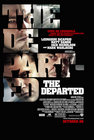
Film: Dir. Martin Scorsese - The Departed

Dir: Martin Scorsese
The Departed
[Thriller]


One the one hand, The Departed is the kind of movie that makes film makers up and down the country seeth with jealously. Every shot is exact - painstakingly crafted and costing thousands of dollars, the lead actors mostly turn in solid performances and the plot contains a suitable number of twists and turns to keep even the most ardent 24 fan on the edge of their seat. However, it is also produced so appallingly (with one of the most unsatisfying non-endings in recent memory) that any teen with a video camera will be wondering why they can't get a job in Hollywood.

The tagline is perhaps the best way to outline the plot of The Departed without giving too much away. "Cops or criminals - when you're facing a loaded gun, what's the difference?" growls Jack Nicholson in one of the movie's most memorable scenes. Nicholson plays the head of an Irish family business who want to secure a lucrative deal with the Chinese for an exchange of microchip technology. As you might expect, they also kill lots of people along the way with the help of guns, muscle (provided here by a typically gruff Ray Winstone) and sweet talking in restaurants.

However, what sets The Departed apart from run-of-the-mill cops and robbers thrillers is the much-alluded to dichotomy. You see, the cops have a rat inside the mob (a superb Leonardo Di Caprio), and the mob have a rat inside the police force (a predictable Matt Damon). Communications between the rats and their respective groups take place via numerous covert telephone conversations which arouse little or no suspicion, despite the fact that both sides know their ranks have been infiltrated.

At one point, for example, police rat Damon is caught by his boss whispering into a mobile phone and looking painfully secretive in a way that graduates of acting school really shouldn't. However, Damon simply explains that it is his mother on the line, to which his boss (Martin Sheen, still in West Wing mode) fails to react and thus refuses to pursue a blatantly unnatural situation. Nevertheless, Scorsese's direction and strong moments of dialogue ensure that such occasional blips are easily overlooked.

That is, of course, until the aforementioned car crash of an ending. While initially satisfying (for reasons which it would be inappropriate to discuss here), much of the conclusion of the film was clearly left on the cutting room floor and is extremely unsatisfactory considering the calibre of the previous 150 minutes. Loose ends are left hanging, but in a frustrating rather than intriguing manner. Furthermore, the ending does not mesh at all well with the slow, deliberate pacing of the movie.

So, though hampered by minor plot inconsistencies and a disastrous conclusion, The Departed remains a smart, funny, gripping thriller in the rightly revered Scorsese tradition. As a result, it comes highly recommended. 82


Wednesday, July 12, 2006

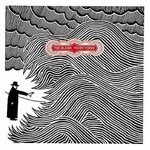
Music: Thom Yorke - The Eraser

Thom Yorke
The Eraser
[Electronic]


At first, the idea of a Radiohead fan reviewing a Thom Yorke album may well seem a mite daft. You can bet I’ll be a biased fan-boy, right? Well, the truth is, if you’re not a Radiohead fan then there are only three reasonable possibilities: (a) you detest music (b) you detest popular music (c) your favourite band gets good reviews in Kerrang magazine.

Thom’s boys have been responsible for some of the most rewarding, innovative, enduring, mind-bending, danceable and downright catchy tunes of the last fifteen years. They are the most critically acclaimed band since the Beatles. They had a number one album without releasing any singles. Tickets for their tours sell out in minutes yet their sets notoriously emit some of their most popular songs. They are name-dropped by everyone from David Cameron to Graham Le Saux. They make experimental jazz wankery appealing for chrissakes! To put it simply, if you’re not a Radiohead fan to some degree, you just don’t appreciate good music.

To say The Eraser has been shrouded in secrecy would be like calling the MI5 a bit insular – it was only announced in May and leaked on the internet soon after. Compared with the immense pressure traditionally associated with Radiohead releases (Yorke described the post-production work on Ok Computer as “utterly terrifying”, the follow-up’s recording sessions almost split the band), The Eraser has been a breeze for the Radiohead marketing machine. A few cryptic adverts, a cryptic website, cryptic blog posts from Thom – we are effectively back to the deliberately obtuse, non-promotional strategy of Kid A. And there is good reason for it.

Unlike the bombast of Ok Computer or its stadium-friendly predecessor, The Bends, The Eraser’s primary focus is the minimal, claustrophobic laptop sound that Thom has been obsessing over for a number of years. It is a sound that can be recognised in previous Radiohead songs (“The Gloaming”, “Packt Like Sardines In A Crushd Tin Box”), yet to say The Eraser sounds like a Radiohead record would be wholly fallacious. The voice we all know and love is obviously on show, but this is clearly Thom’s own work, and it is because of this that his debut “solo” effort occasionally falls short of the impeccably high standards we have become accustomed to.

One of Radiohead’s biggest strengths has always been to play to each band member’s individual strengths. For example, Jonny Greenwood can play every instrument under the sun, so why not let him? Phil Selway is an exceptional drummer, so why make him behave like a caveman banging a big stick a la Meg White when he can beat out incredible rhythmic patterns? The Eraser, therefore, lacks the warmth of Amnesiac or the textures of Ok Computer, yet is nevertheless similarly engrossing.

The majority of songs are built around a single idea, honed to perfection by the stellar production work of long-time collaborator Nigel Godrich. The title track begins with off-key piano chords and a soft yet urgent beat, building into a chilling chorus with Yorke singing choral backing vocals behind his own words (“The more you try to erase me / The more that I appear”). An incredibly tight arrangement, it is immediatedly listenable.

“Analyse” continues the confident start with skittering beats and a gentle piano melody, topped off with another strong vocal performance. “It gets you down” muses Thom as he successfully aims for a similar reaction in the listener, “There’s no time to analyse / To think things through / To make sense”. On first listen you may well roll your eyes and reach for the irony file. Perseverance reaps great rewards here, however.

Unfortunately, the same cannot be said for “The Clock”. As well as recycled Aphex Twin electronics, part of the melody is made up of Yorke’s obscure warbling that accompanies the intro to live renditions of “The National Anthem”. It might sound good on paper, but it really doesn’t resonate on record. Of course, the consistently outstanding vocal work carries the track well enough; the musical backing here just does nothing to get the pulse racing.

Perhaps the most well-known song on The Eraser is “Black Swan”, given its prominence on the television adverts, and it has been used to promote the album with good reason. Yorke repeatedly notes a relationship is “fucked up” in the least obnoxious way possible, over a reserved bass line and the funkiest beats on the album. “People get crushed like biscuit crumbs / And lay down in the bitumen” also happens to be my favourite lyric on the record.

The next two songs - “Skip Divided” and “Atoms For Peace” - offer mixed, if interesting, results. The former is easily the weakest song on the album, going seriously overboard with the experimentation. Yorke fails to use his voice to maximum effect, singing a low, monotone vocal as overbearing synth noise overwhelms any intended anger in the words. The latter, on the other hand, sets the album up for a strong closing sequence. If singing about eating an “artichoke heart” could ever be described as beautiful, then Thom Yorke would be one of a rare handful able to pull it off. An astounding falsetto overcomes the lyrical inadequacies with ease and, backed by a delightful tune reminiscent of Boards of Canada, the song is a winner.

“And It Rained All Night” could be described as the strongest of the truly experimental songs on offer here. Bass hums enticingly beneath the “click click clack” of two drumsticks and wobbly synth. Yorke even raps some of the words (“It’s relentless, invisible, indefatigable, indisputable, undeniable”) to the flow of the music, recalling the verses of “A Wolf At The Door” which were so highly acclaimed.

While not among the most impressive songs, “Harrowdown Hill” (a commentary on the suicide of government official David Kelly) is certainly competent. A fidgety bass line leads the way for most of the duration, accompanying the rant effectively. “I can’t take the pressure / No-one cares if you live or die” is as direct as Yorke’s words come and characterises the majority of the songs here, opting for a more forthright theme rather than the traditional cut ‘n’ paste lyrical style of Radiohead’s experimental tunes.

Closer “Cymbal Rush”, much like the rest of this release, would not fit on any Radiohead record. However, the difference is that it can easily stand alongside Radiohead’s best work and is a superb way for Yorke to put a cap on his solo career, at least for the time being. Incredibly urgent beats synchronise with a surging piano chord as video game noises phase in and out of the background. The success of this song is that it reaches its peak so late on (four minutes into a five minute song) and ends while still growing in momentum. The genius is that it immediately makes you want to hear The Eraser all over again. If the song reached its rightful conclusion at around the eight minute mark, it wouldn’t have anywhere near the same effect. Instead, the listener is enticed by the prospect of further recordings from a man who is unarguably one of the leading lights in modern music.

If The Eraser is indeed only the starting point many believe it to be then, faults aside, it is potentially the start of something wonderful. 81


Saturday, June 24, 2006

Games: Valve - Half-Life 2: Episode One

Valve
Half-Life 2: Episode One
[First-Person Shooter]


Chances are that if you play games you've played the original Half-Life and remember it as one of the greatest games of all time. The much hyped, much delayed Half-Life 2 continued Valve Software's impeccable reputation and now it has made artistic (and economic) sense for them to continue their series in episodic form. The first of these instalments, predictably named Half-Life 2: Episode One, attempts to continue the story established in its predecessor, and for the most part it is successful.

The story once again revolves around Gordon Freeman's attempts to thwart evil alien race the Combine and their totalitarian regime in the mysterious City 17, now in ruins following Gordon and sidekick Alyx's actions in the original. We begin our story with Alyx's popular robot buddy, Dog, rescuing Gordon from rubble outside the "citadel" - the Combine's base of operations - and the player is immediately reacquainted with Half-Life 2's main characters - the aforementioned Alyx and Dog, Alyx's father Eli Vance and crackpot scientist Professor Kleiner. It transpires that the only way for Gordon and Alyx to escape safely is to re-enter the citadel and prevent a meltdown by accessing the core, and so begins the third part of Gordon Freeman's adventures.

Understandably, Eli is not too happy with his daughter risking life and limb (despite the fact she has been battling for the city's resistance for a considerable time) and an emotionally charged debate between the two immediately highlights one of Episode One's graphical improvements over its predecessor - that of improved facial expressions in dialogue between characters. The two wince and gesture in surprising detail and it is obvious that Valve are keen to enhance their Source engine at every available opportunity. Other graphical improvements apparently include a higher pixel count for the character's faces to accompany the new expressions, improved lighting in dark spaces and greater use of HDR (High Dynamic Range) lighting hinted at in the Lost Coast demo. While none are as immediately obvious as the detailed expressions, it is clear that the Source engine is becoming more impressive with each release from Valve, and though not quite on par with Bethesda's recent efforts in Oblivion, it is clear than the plan is to enhance the engine gradually in order to avoid programming a new one from scratch, as that is what caused much of the delay with Half-Life 2's release in 2004.

The action may initially take place in the spiralling citadel but Alyx and Gordon also visit spooky underground locations submerged in darkness and the battered streets of City 17, helping to ensure the player never becomes bored with a specific location. I was initially disappointed with the return to what I felt was Half-Life 2's weakest section, however there are some interesting puzzles waiting to be tackled with the souped-up gravity gun, even if the action isn't in the least bit challenging with such a powerful weapon and the generous placement of suit chargers.

The underground section is a different matter, however, and offers perhaps the best action in the series since the unforgettable "Blast Pit" and "Questionable Ethics" chapters in 1998's Half-Life. Alyx often stays behind as Gordon seeks a way to restore power to the area in question, before the two are assaulted from all sides by a combination of zombies, ant lions, head crabs and the new "zombines" (faster and stronger zombies created when a Combine soldier is possessed by a head crab). Interestingly, the player goes through much of this section of the game without a firearm or ammo, and is required to light up enemies with the flashlight for Alyx to take down with her pistol. What could easily have become a frustratingly difficult and cumbersome section of Episode One is made hugely enjoyable by Alyx's impressive combat skills and the mechanism's flawless execution. Crucially, while this section is by no means easy, it is fair.

The final section of the game follows Alyx, Gordon and legendary security guard Barney Calhoun as the trio attempt to evacuate the remaining residents of City 17. Featuring thrilling urban squad combat and a particularly memorable battle with a Combine gunship, the final third of Episode One is certainly up to standard and continues the electric pace established by the underground chapter. While the extremely basic squad mechanics of Half-Life 2 are still in place, it is unreasonable to expect Valve to live up to games such as Freedom Fighters in this regard as it is such as minor section of a much bigger game. Gordon's resistance buddies can occasionally find themselves in the way, especially in tight corridors, and seem to draw little if any fire away from the player. Nevertheless, they fire accurately and provide the player with invaluable support (by way of ammo and med kits) in dense areas of Combine fortification.

The player spends much of the game in the company of Alyx, however this potentially disastrous game mechanic that all-too-often fails in other titles and becomes a chore rather than a pleasure is executed to perfection. Alyx rarely tells Gordon to get a move on and allows the game to played at the desired pace of the player. She cracks jokes and often exhibits dread, excitement and relief, giving her a real air of humanity, and thankfully stays well out of the way during puzzle sections. It remains to be seen whether this would work during a full-length game (according to Valve, Episode One's average completion time is a little over four hours), however Alyx acts as effective and, crucially, welcome support throughout the game.

Aside from the expected shortness of the game and the basic squad mechanics, it is a genuine challenge to find fault with Episode One. Granted, there are no new weapons, only a single new enemy and everything looks pretty much the same, but then what did you expect? One could argue that the citadel section is underwhelming and superseded by the later sections, yet to me this only highlights the quality of the underground and city areas rather than suggesting the game's opening hour is below par. As with the
Lost Coast demo, commentary from the developers is available to explain various aspects of the game and comes highly recommended. Valve are clearly a company that thrives on its fans, and the way they claim to have tweaked the balance of gameplay as a result of playtesters' feedback is palpable. In fact, Valve admit to having removed chunks of Episode One because of a negative reaction from players; if only all developers applied this level of scrutiny we would have considerably better gaming experiences on offer. Imagine, for example, if Hideo Kojima had removed the pointless cut scenes of pseudo-philosophical bullshit from the end of Metal Gear Solid 2. Perhaps it is indicative of the believability of the Half-Life universe that it requires so little explanation.

Overall, Half-Life 2: Episode One delivers enjoyable co-operative gameplay, hugely entertaining AI battles, challenging puzzles and a few scares along the way. The teaser trailer for Episode Two, a reward for completion, further highlights how Valve are reshaping the landscape of first-person shooters. While the likes of Prey are doing exactly what the original Half-Life did nearly eight years ago, Valve are one of a handful of developers innovating rather than imitating, and Half-Life 2: Episode One, in almost all respects, could not be better proof of that. It's just over before you know it. 83

Friday, June 23, 2006

Music: Bright Eyes - Motion Sickness

Bright Eyes
Motion Sickness
[Live / Rock]


Let's start with the obvious; this is one for the fans. If you don't like Bright Eyes, this isn' t the disk to convert you; try I'm Wide Awake It's Morning for that, or Digital Ash In A Digital Urn if you think wide-eyed, troubled Nebraskan Conor Oberst is only capable of one mode of songwriting.

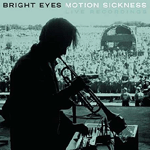
This live album is composed heavily of cuts from last year's Wide Awake tour, and whilst featuring a lot of tracks from that album in their live incarnations, it also covers a couple of tracks from previous albums;"Make War" and "Method Acting" from Lifted and a scaled down (Thank you, you've been a great audience) version of "A Scale, A Mirror, And These Indifferent Clocks" entitled simply "Scale". There's also a generous wadge of bonus material, including a beautiful cover of Elliot Smiths "The Biggest Lie" and a perky, countrified take on Feist's "Mushaboom" (Yes, that song from the advert, you'd recognise it if you heard it) in which Oberst doesn't really capture the vocal but the band do a good job. The other treats are the previously un-released and rather pretty "Southern State" and a barn-storming version of Lua B-Side "True Blue", complete with an excellent solo by Saddle-Creek resident trumpeter Nate Walcott, who is pictured on the cover. In fact, this point highlights the fact that this is very much a road record and a band record; this is not Conor's record alone, and he knows it.

Sleevenotes are provided by drummer Jason Boesel (also Rilo Kiley's percussionist) and he proves an eloquent, frank and perceptive companion to the journey, couching the tour firmly in our era, with references to iPods, Japanese bullet-trains and Hunter Thompson's suicide. Readers will smile wryly at how the band crosses the path of Bush's entourage, especially given the enthusiastic reception of witty acoustic rant "When The President Talks To God".

As for the bulk of the record; live versions of Wide Awake favourites like "Road To Joy" and "At The Bottom Of Everything" are all well done; the quality of the takes culled is very high and the band strike the right balance between live spontaneity and studio accuracy. No "Lua" or "First Day Of My Life" though; but if you have Wide Awake you'll own acoustic versions anyway.

In short, this is by no means an essential record. But it is a great little snack to keep the fans happy until next year's double album. There's a lot here to like, and if you're a completist, you'll lap it up. As I've said though, if you're a newcomer, just go buy Wide Awake instead. In short; a hard record to score, but that won't stop me trying. 80

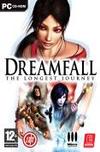
Games: Funcom - Dreamfall

Ragnar Tornquist / Funcom
Dreamfall
[Adventure]


Ok, let's get the big one out of the way right now; this game has a story that kicks ass. If you aren't familiar with the name, it's a sequel to a game called The Longest Journey. Released six years ago, it grew a cult following of gamers looking for "classical" graphic adventures (an increasingly niche genre) and story-based gameplay. It concerned the endeavours of a girl called April Ryan to save conjoined worlds of magic and technology called "Stark" and "Arcadia". (Guess which is which...)

"Wait a minute!" I hear you cry. "He said this had a story that kicks ass. This sounds like the usual sci-fantasy hokum brewed up by dozens of immature game designers."

Hear me out, reader. What really elevates these titles above the average fodder is the characters. All of which, without exception, are well written and voice acted. That's right, kids, these games have good voice acting. Further, lots of the most interesting aspects of The Longest Journey centred around the character development of April herself; starting as an art student in Venice, a small, bohemian corner of a futuristic city, Newport, we spent a lot of the game watching her progress from carefree dreamer to a woman with the weight of two worlds on her shoulders.

She returns, older and disillusioned, in Dreamfall, along with two new protagonists, Kian, a warrior who begins as April's enemy but must re-examine his own faith and allegiances, and Zoe, a privileged college-dropout whose life is stuck in a rut until she discovers the existence of the parallel world and becomes embroiled in intrigue involving lucid dreams, robotics corporations, and a creepy little girl in the style of The Ring.

By turns, the plot of Dreamfall is clever, funny and heartbreaking. The ending led me as close to tears as a game ever has, and there's even some time for a spot of bush-bashing/nazi commentary. The art direction, also, is superb; this game will leave stunning images burned on the back of your retinas for a long while after. The music is tasteful and suits each scenario well.

With so much good, what can I say stopped me giving this a full two-thumbs up? Well, firstly, there's not actually that much to the gameplay. There are some trivially easily puzzles (apart from one unfair music puzzle which only lets you hear the cue once) and a little bit of sneaking and fighting. The fighting has clunky, unresponsive controls, but is either easy or skippable. Most of the time you'll be walking about from point A to B, clearly signposted, or talking. Boy, is there a lot of dialogue. I'm talking fifty per cent of the game length, here, no exaggeration. You'll be thanking your lucky stars there is good voice acting and writing, because without it you would be bored out of your skull. As it is, it would merely have been nice if the developers had put more interaction into the conversations.

Now, believe me, I would rather have easy challenges than bizarre, illogical puzzles any day. But there are so many opportunities for puzzles to have been naturally integrated into this game that the designers missed, even a plot-centric guy like me was longing for a bit of an intellectual workout. Without the innovations of Fahrenheit, this game does seem very much like simply a My First Adventure - with very good writing, sound and art.

You'll enjoy it, and it's a blast while it lasts. But don't expect much of a challenge, and don't expect a neatly wrapped up ending either. The story is part two of a trilogy - and you'll have to wait another six years or whatever for the end of the story. But the key point here is that it's a story you'll want to finish, not another shooting gallery you couldn't care less about. 87