Showing posts with label film. Show all posts

Saturday, June 30, 2007

Film: Dir. Andrew Bujalski - Mutual Appreciation

Dir. Andrew Bujalski
Mutual Appreciation
[Drama/Indie]


The plot: Alan (Justin Rice) is a musician who leaves a busted-up band for New York, and a new musical voyage. He tries to stay focused and fends off all manner of distractions, including the attraction to his good friend's girlfriend (Rachel Clift).

Mutual Appreciation, the sophomore effort of writer-director Andrew Bujalski, is one of those films which are so unapologetically genre-specific that, within the first five minutes, viewers will know if they are going to adore or abhor. Shot in black and white and in that wobbly, unprofessional style so beloved of today’s professionals, it features insecure people mumbling to other insecure people about things they really shouldn’t be so insecure about. Little surprise, then, that it is one of the most impressive films I have seen so far this year*.

This recommendation should be taken with a pinch of salt, however, because, without wishing to sound too much like the prickly, outstretched tentacle of truth belonging to a certain Friday night television review programme, Mutual Appreciation is not for everyone.

What it is, though, is a big, colourless, two-fingered salute to the recent cultural obsession with all things normal. Unlike all the books, games, music and movies that purport to celebrate the mundane but do so through a clean-cut looking glass of icy precision, this is fucking mundane, and dull, and unimportant and hopelessly unspectacular.

As characters shuffle from room to room, uttering sweet nothings between sips of water, tweaks of hair and adjustments of belt buckles, we are reminded just what it takes to make a great independent film - a complete lack of consideration for the comfort of the viewer, the producer, and acts 1, 2a, 2b and 3. There are no twists, no shocks, no bangs (rarely any noise at all, in fact), hardly any bucks and a whole lot of youthful indignation. I wasn’t alive in 1977, but this is the type of movie which makes me wish I was.

Whereas the purpose of punk was to do be active, to do something (anything) to show how much society didn’t care, the role of films like Mutual Appreciation is to critique the relentless pace of that same society in the twenty-first century by being deliberately slow, achingly apathetic and irresistibly insignificant; don’t vote, don’t have kids, don’t get on the property ladder and don’t get a job. Instead, do have friends, do stay in school, do be creative and do whoever the hell you like. If you don’t have time then, well, that’s your own bloody fault. 90

* Though originally released in 2005, it only recently made its merry way to my area.

Film: Dir. Sam Raimi - Spider-Man 3

Dir. Sam Raimi
Spider-Man 3
[Action]


The plot: Peter Parker (Tobey MacGuire) and his girlfriend Mary Jane (Kirsten Dunst) experience problems with their relationship while a mob of dastardly villains cause mayhem in New York. In an attempt to win back her heart, Parker once again dons the red suit and attempts to keep the peace, but he soon finds he isn’t strong enough to deal with them all. So what does he do? That’s right - he turns to the dark side! Whatever will Peter’s impeccably moral pals think of that…?

Considering it is the most expensive film ever made, Spider-Man 3 is a remarkably unspectacular affair; while there may be endless shots of Spidey swinging from building to building, collapsing scenery, high-speed chase sequences and oodles of green screen, the overall feel of the movie is one of conspicuous regularity. It is a two-and-a-half-hour slog through tired conventions, awash with missed opportunities and painfully aglow with all the requisite glitz and glamour of a summer blockbuster.

Maguire’s typically understated potrayal of the series’ withdrawn, bespectacled, slightly kooky (anti-)hero is again impressive, delivering appropriate helpings of self-conscious cool without ever venturing into the dreaded realm of geek chic. Unfortunately, however, he is forced to spend the majority of the movie’s duration spluttering lazy one-liners at the camera as the eponymous protagonist. Even more disappointing is the lack of scientific evidence to substantiate the implication that donning a tight-fitting, blood-red spandex two-piece is a one-way ticket to effortless charisma, intoxicating sex appeal and faultless integrity.

The plot holds together reasonably well for the first sixty minutes, documenting the questionable origins of the Sandman and providing an uncomfortable insight into Peter Parker’s now fractious relationship with Mary Jane, who is once again competently played by Kirsten Dunst (in case you hadn’t realised by now, she does ditzy and doe-eyed very well). However, after a bright start, things get very messy indeed as too much side-plot, too many villains and far too much Hollywood schmaltz (redemption, valour, patriarchal dogma!) overwhelm the strong sense of subtlety established in the opening hour.

Then again, considering very silly cult vanguard Sam Raimi was at the reigns, some may be willing to believe the rushed, tiresome and clichéd finale to be the machinations of a post-modern, absurdist masterpiece steeped in cultural ironies. I didn’t, though I have to admit that when, in order to authenticate his turn as ‘dark Spider-Man’, Maguire’s preppy mop was immaculately glued into position as the universal badge of post-millennial alienation - the emo fringe - I was partly convinced. 50

Film: Dir. Juan Carlos Fresnadillo - 28 Weeks Later

Dir. Juan Carlos Fresnadillo
28 Weeks Later
[Horror]


The plot: 28 weeks after the initial outbreak of the Rage virus, London is quarantined and the US army is brought in to keep an eye on proceedings. Before long, though, the virus finds its way into the safe zone and all hell breaks loose again. The movie follows a group of plucky survivors as they attempt to escape the virus, London and the unspeakable brutality of assorted American military commanders.

A viewer’s enjoyment of 28 Weeks Later could largely depend on the extent of his or her anti-American sentiment; from the first minute to the last, the film is loaded with thinly-veiled allusions to friendly fire, collateral damage, military occupation, imperialism and, above all else, the supposed foolhardiness of our North American allies.

Whether or not this overtly political approach is warranted (or, indeed, wanted) is up for debate, however what is not in doubt is that, all in all, 28 Weeks Later is a pretty poor horror movie. While it retains the stunningly desolate, post-apocalyptic atmosphere of its superb predecessor, 28 Days Later, complete with wonderfully directed shots of deserted London streets, decaying landmarks (including an unkempt, overgrown Wembley stadium) and the impressively realised safe zone, elsewhere it doesn’t have a great deal going for it.

Firstly, the aforementioned survivors are a dull, uninspired bunch who, apart from a typically robust Robert Carlyle doing Robert Carlyle, do little to convince that their behaviour will deviate from the expected assortment of panicking, screaming, protesting and being mauled in a fantastically gruesome fashion. Don’t get me wrong - I love a fantastically gruesome mauling - but when the cast are so overtly identifiable in their respective roles as either ‘survivors’ or ‘food’, the violence becomes predictable and, thus, much harder to appreciate.

28 Weeks Later also isn’t that scary, mostly relying on stock ‘boo’ moments (camera, accompanied by very loud sound effect, turning to reveal close up of monster’s face) and confused, overly distorted camera work, rather than making effective use of the ingenious setup - previously put to such brilliant use in Danny Boyle’s 2002 original - and potentially provoking subtler chills.

Also, considering the quantities of claret spilled in the movie, it is surprising (and disappointing) how inoffensive 28 Weeks Later actually is; remember, the purpose of the genre is to offend on screen and, in doing so, hold a mirror to society and allow it to reflect upon its own misgivings. Would it be too much to suggest that the anti-American hyperbolae simply serve to disguise the fact that, on the whole, what we have here is nothing more than a low-key action movie? After all, there are lots of guns, gals and explosions, not to mention a glaring plot hole or three.

Where The Texas Chainsaw Massacre used haunting, understated depictions of brutality to comment on the Vietnam war, here 28 Weeks Later uses the Iraq war to comment on the Iraq war, allowing its political sensibilities to supersede making a good horror flick, thus undermining the substance of any overriding message. However, when the prevailing suggestion is absolute, unabashed xenophobia, perhaps that isn’t such a bad thing. 42

Monday, May 14, 2007

Film: Dir. Alejandro Jodorowsky - El Topo

Dir. Alejandro Jodorowsky
El Topo
[Western/Drama/Horror]


The plot: El Topo (Jodorowsky) happens across a horrendous, bloody mess in a remote town. With no clues as to who is responsible, he sets off into the mountains with his son to search for the culprit(s). Lots of crazy shit then proceeds to happen.

Re-released after more than thirty years of legal wrangling, Alejandro Jodorowsky’s cult favourite, El Topo (The Mole), is a hit and miss affair. At once a traditional cowboy tale, blazing satire, unrelenting gore-fest and sketchy moral guidebook, the only certainty with El Topo is that it’s practically impossible to understanding everything the first time through; choppy editing, random cuts, on-screen riddles and apparent character hallucinations all try their utmost to confuse the viewer in what has to be, if nothing else, one of the most bizarre films I have seen in a long time.

Visually it is outstanding, with Jodorowsky’s lens perfectly capturing the baking heat and vastness of an unnamed desert location. The obscurity of the place in itself is often unsettling, featuring a disquieting bunch of misfits (one character consists of two men strapped together, one with no arms and one with no legs), countless dead animals (including gruesome close ups of a skinned, crucified goat and a disembowelled dog, not to mention hundreds of dead rabbits) and buckets of blood waiting to be spilled at every opportunity. Aside from a handful of aesthetic missteps - due, no doubt, to budgetary restrictions - the atmosphere of El Topo is fantastically disturbing.

Where it falls down quite badly is the plot which, though closely adhering to an interesting Biblical allegory becomes an incoherent mess after the first hour. Without revealing too much, after El Topo completes his initial task, he passes out and is transported to a completely different location, subsequently being tasked with a completely different objective. Now, though I’m often turned off by the unnecessary handholding in most British and American mainstream flicks, a little explanation wouldn’t have gone amiss, especially considering the second half is also stylistically and dramatically inferior to the gripping, more character-driven first.

That said, the frequent surrealism is actually managed terrifically by Jodorowsky, never threatening to undermine or override the main action. The acting is also top notch for such a low budget movie, especially considering many of the leads are relative unknowns and much of the supporting cast were chosen primarily because of their physical idiosyncrasies (you’ll see).

On the whole, though overly frequent morality checks and the apparent loss of direction do weigh heavily against El Topo, its overall craziness, jet-black heart and dazzling cinematography ensure that it’s definitely worth a watch. 73

Thursday, April 19, 2007

Film: Dir. Edgar Wright - Hot Fuzz

Dir. Edgar Wright
Hot Fuzz
[Comedy]


2004's Shaun of the Dead was rightly regarded as one of the most accomplished spoofs in recent times. Bringing Simon Pegg and Nick Frost's irresistible brand of humour to a wider audience, it was consistently funny, well structured and also handled more serious moments with ease. Though it never quite reached the dizzy heights of This is Spinal Tap, even king of the absurd Christopher Guest could have learned a thing or two from its superb bastardization of the ridiculous (pool cues, anyone?).

Given the vast success of their first foray into film, it's hardly surprising the duo are back for more with Hot Fuzz – an attempted send-up of the countless police buddy movies out there – and the film studio evidently has more faith this time too, splashing the cash on the likes of Timothy Dalton, Jim Broadbent, Steve Coogan, Bill Bailey and more. And though the bigger budget, slicker direction and more accessible gags will obviously win the pair a larger audience (and, you guessed it, loadsa dosh), something has undoubtedly gone missing along the way.

However, identifying exactly what makes Hot Fuzz so inferior to its predecessor is no easy task. Is it the unnecessarily long, self-indulgent running time (director Edgar Wright has admitted deliberately stretching the film to make it exactly two hours long)? Is it the plethora of tired jokes (cops putting on shades and folding their arms, wow...)? Is it the fact that many of the big stars have clearly turned up for the money and can't be bothered to act (a sequence with Coogan, Freeman and Nighy is almost unbearably bad)? It's probably a combination of the three, though Coogan's performance really has to be seen to be believed. Hot Fuzz is also notable for its many missed opportunities. To give one example, parts of the film make effective use of extreme violence, yet the inevitable shootouts are almost entirely bloodless; anyone's who's seen Evil Dead 2 will appreciate the comedic potential of a crimson tide.

Elsewhere, Edgar Wright is keen to show off his new camera, putting together some great fast-paced montages, over the top zooms, swoops and pans that really complement the preposterousness of the mood. Yet about half way through the film the visual effects vanish almost entirely, and with them goes any possibility that some reasonably funny scenes could be made much more memorable.

As it stands now, a week after I saw the film, the majority has been completely forgotten.It's not that Hot Fuzz isn't funny - it made me laugh out loud three or four times - it's just that, after exhibiting such talent in Spaced and then Shaun..., we had a right to expect much more from one of Britain's brightest double acts. At least it's better than Hyperspace.
56

Wednesday, April 04, 2007

Film: Dir. Kevin MacDonald - The Last King of Scotland

Dir. Kevin Macdonald
The Last King of Scotland
[Thriller]


The Plot: Scottish student Nicholas Garrigan (James McAvoy), having just gained his degree in medicine, chooses a random place to fly to and exercise his new found skills. Ending up in Uganda, he finds himself employed as Idi Amin's personal physician and confidant. Things start to go wrong shortly after the genocide commences.

Much has been made of Forest Whitaker's headline-grabbing portrayal of the headline-grabbing Idi Amin in The Last King of Scotland and, without doubt, it is a great performance. The story may be mediocre, the politics clumsy and the supporting actors disappointing but, yes, Whitaker is great. So too is James McAvoy as a slimy, often repulsive misogynist, exploiting the privileged position he finds himself in as Amin's personal physician, thankfully making it easier to overlook Gillian Anderson's abominable, gooey-eyed, one-dimensional temptress.

Where the film fails is in trying to cram too many minor characters and unnecessary subtext into a very basic plot – Amin was a bastard and we put him there, watch how the white man takes advantage when opportunities present themselves. It should either be more focused and twenty minutes shorter, or much heavier and forty minutes longer, yet it settles for an uncomfortable middle ground, resulting in a film that feels both rushed and, at times, plodding. It fails as a thriller by not being nearly thrilling enough, and it fails as Hotel Rwanda 2 by not being nearly deep enough. Honestly, The Sound of Music had more important things to say.

As mentioned previously, however, the two male leads are on good form and just about manage to hold the thing together; in particular, the scenes involving only Whitaker and McAvoy as Amin's mental stability deteriorates are frequently compelling. It also gets extra marks for ripping a particularly gruesome scene straight out of Cannibal Ferox and for avoiding what I thought would be a tiresomely predictable climax. 63

Film: Dir. Roger Michell - Venus

Dir. Roger Michell
Venus
[Drama / Comedy]


The Plot: charming English gent Ian (Leslie Phillips) is exasperated when his boisterous niece Jessie (Jodie Whittaker) comes to live with him. Another charming English gent called Morris (Peter O'Toole) meets her, the two hit it off and hilarity/heartbreak ensues...

Chances are that, if you are either (i) between the ages of forty and sixty-five, (ii) charmingly snobbish, or (iii) blissfully ignorant, you will absolutely love Venus. You see, it portrays the working class youth of Britain in a perfectly accurate light. That's right, folks, everyone under the age of twenty-five is a rude, promiscuous, tracksuit-wearing, Pot Noodle-eating booze hound. Oh, praise be to writer Hanef Kureishi for such cutting social commentary.

Back in the real world, it's pretty obvious from the beginning of Venus that the film's perception of today's youth is almost vomit-inducing in its ineptitude. You know how it goes: drinking alcopops, shopping in TopShop and listening to Kylie Minogue (!), Jessie initially has no time for higher pleasures like Shakespeare but eventually begins to bond with the quirky and lovable old guy until she realises he's far too good for her because he's from the educated classes and she's just a pauper and that would be very wrong indeed (now breathe). Excuse me for asking, but, isn't this the twenty-first century?

Sure, there's the odd nice touch and a handful of moments that will make you smile, but the fact that the majority of Venus even got past the conception stage is extremely worrying for the future of British cinema. I say the majority because for about a third of Venus Jessie is nowhere to be seen and what we get instead, via some fantastic chemistry between Peter O'Toole, Richard Griffiths and Leslie Phillips, is some great dialogue exploring the nuances of old age. At regular intervals throughout the film, the trio meet in their local greasy spoon to discuss the week's events with great enthusiasm and caustic wit. Some of the scenes are so electric it makes it slightly easier to stomach lining the pockets of a bigot.

Special mention must also go to a scene which almost manages to completely destroy Peter O'Toole's reputation as one of the finest acting talents Britain has ever produced. Rejected by Jessie and wandering the streets of London, his character Morris happens upon a deserted theatre. Shambling awkwardly to centre stage he surveys the scene, attempting to recall memories of his lost youth. In the most serious tone he can manage, he whispers to himself, “To be...or not to be.” I assure you it is almost worth the entry fee alone.

Venus, then – good for exposing the exploitable hidden prejudices plaguing middle England, bad for being a good film. 33

Thursday, January 11, 2007

Film / Games / Music: Harry's Review of 2006


2006 was, as always with the arts, an interesting year.

In music there were highly-publicised releases from the likes of The Beatles, The Killers, Bob Dylan, Nas, Beyonce, Justin, Christina, My Chemical Romance and Tom Waits, as well as fervent championing of a number of lesser-known acts such as Belle & Sebastian, Liars, The Knife, Joanna Newsom, Ghostface, TV on the Radio (proving the old adage that one single does not a good album make) and more. We saw Hope of the States split up after disastrous sales of their sophomore album, Left, and the effective demise of The Futureheads as they too experienced second album difficulties - News & Tributes shifted a measly 32,000 copies and the band were subsequently dropped from their label, 679 Recordings.

Movie-wise, we witnessed "the end of Western civilisation as we know it" (Mark Kermode) as Gore Verbinski's bloated Pirates of the Caribbean: Dead Man's Chest became one of the highest grossing movies ever made, while a number of foreign language films broke through into the mainstream, most notably Requiem and Pan's Labyrinth. We had a new Bond (yay), Borat's debut (nay) and everyone's favourite slightly disturbing celebrity (no, not Michael Jackson) return in Mission Impossible: III (hmm). Just when you thought it wasn't possible to continue raping the cash cow that is 1970s horror movies, along came Jonathan Liebesman's horrific (in a bad way) prequel to the remake The Texas Chainsaw Massacre: The Beginning. At least we had Saw 3, eh?

2006 brought a sad end to the decade-old era of gameplay with the arrival of next-gen tomfoolery; Gears of War scooping countless awards for being shiny, despite lacking original narrative, setting, characters or gameplay comes to mind. At least Monsieur Sea Bass Takatsuka finally perfected his world-beating footie franchise with the colossal Pro Evolution Soccer 6 (this time it can't get any better, it just can't damn it!) and we saw a slight return to story-based gaming on the PC with Dreamfall: The Longest Journey, Broken Sword: The Angel of Death and the welcome return of Sam & Max. Artsy gaming continued to suffer as the big names trumped the independent studios, culminating in the lamentable demise of Clover Studios, creators of the (apparently) masterful Okami. The Nintendo DS outfought the PSP, though as long as portable games remain laughably overpriced that fails to be of particular concern.

And, without further ado, here is my rundown of the best of this year's releases in music, movies and games.

Top 10 Singles:

01. The Spinto Band - "Oh Mandy"
02. The Wombats - "Moving to New York"
03. The Pipettes - "Pull Shapes"
04. CSS - "Let's Make Love and Listen to Death from Above"
05. Justice vs. Simian - "We Are Your Friends"
06. Christina Aguilera - "Ain't No Other Man"
07. Gnarls Barkley - "Crazy"
08. TV on the Radio - "Wolf Like Me"
09. Peter Bjorn & John - "Young Folks"
10. Belle & Sebastian - "Funny Little Frog"

Top 10 Album Tracks:

01. Belle & Sebastian - "Another Sunny Day"
02. Liars - "Let's Not Wrestle Mt. Heart Attack"
03. Squarepusher - "The Modern Bass Guitar"
04. Hope of the States - "This is A Question"
05. Clipse - Dirty Money
06. The Long Blondes - "Swallow Tattoo"
07. The Pipettes - "It Hurts to See You Dance So Well"
08. The Knife - "Silent Shout"
09. Thom Yorke - "Cymbal Rush"
10. Guillemots -"Sao Paulo"

Top 10 Albums:

01. Liars - Drum's Not Dead*
02. Joanna Newsom - Ys*
03. Guillemots - Through the Window Pane*
04. The Knife - Silent Shout
05. Thom Yorke - The Eraser
06. Clipse - Hell Hath No Fury
07. Squarepusher - Hello Everything
08. Ghostface - Fishscale
09. Amy Winehouse - Back to Black
10. Howling Bells - Howling Bells

Top 5 Movies:

01. Pan's Labyrinth (del Toro)*
02. Grbavica (Zbanic)
03. The Departed (Scorsese)
04. Inside Man (Lee)
05. Requiem (Schmid)

Top 5 Games:

01. Pro Evolution Soccer 6 (KCET)*
02. The Elder Scrolls IV: Oblivion (Bethesda)*
03. Dreamfall: The Longest Journey (Funcom)
04. Medieval 2: Total War (Sega)
05. Half-Life 2: Episode One (Valve)

* denotes 90+ rating

Tuesday, January 09, 2007

Film: Dir. Jasmila Zbanic - Grbavica

Dir. Jasmila Zbanic
Grbavica
[ Drama ]


Much as I'd love to consider myself a connoisseur of the big screen, I have to confess that my experiences with Bosnia-Herzegovinan cinema are few and far between (read: non-existent). In fact, my knowledge of the area's politics was embarrassingly limited until a quick scan of Wikipedia revealed all: Serbs and Bosnians hate each other and a guy with a funny name killed a load of folks.

Perhaps this detailed historical insight can go some way to explaining why Jasmila Zbanic's Grbavica has yet to see a release in areas with a high concentration of Serbs, or perhaps the film is just so charmingly low-budget that the film makers can barely distribute it outside their own back yard. After all, I saw a "premiere" of Grbavica (a.k.a. Esma's Secret in Britain) nearly ten months after its original release date.

As those of you with access to exclusive screenings at certain film festivals may recall, the film scooped Berlin's Golden Bear - perhaps the most prestigious award in independent cinema - back in February. For those of us mere mortals, however, Grbavica seems to have slipped under the radar. On mentioning the film to my peers I rightly anticipated the blank looks and puzzled expressions; indeed, I only saw the film on impulse after happening upon a conveniently placed poster that advertised the film's critical success.

Though the point of Grbavica is to reflect on the horrors of the area's history (large parts focus on a rape victims' support group), there is an underlying plot which drives the movie. Sara (Luna Mijovic) is preparing to go on a school trip under the assumption that, because she has been told her father is a war hero, she will be able to go free of charge under a special scheme that rewards sacrifices made in the Balkan War. All she needs to do is produce a certificate to the school that proves her father's martyrdom and all will be well. However, her mother Esma (the one with the secret, remember?), played by veteran Mirjana Kiranovic, insists on paying full price for the trip and claims she has "lost" said certificate.

While the plot may seem a little simplistic (and the twist more than a little obvious), the narrative drive in Grbavica is only intended to keep the story focussed while the relationships between the different characters are explored. Mijovic and Kiranovic effectively portray the complex relationship between a parent and an adolescent, seamlessly juxtaposing blistering rows with quieter, more heart-warming moments. In the opening scene, for example, a playful wrestle turns sour when Sara refuses to relinquish a grip on her mother.

Although the relationship between mother and daughter is dwelt upon the most, the interaction between the two females and their male companions is equally compelling. After an initial scrap during a playground football game, we see Sara become increasingly fond of class rebel Samir (Kenan Catic) with the pair eventually skipping school and getting up to other assorted mischief. Given the volatility of her domestic relationship, it is easy to empathise with Sara as she is drawn deeper and deeper into her friend's world. Similarly, Esma is cautiously smitten by a work colleague who is made to appear extremely menacing. As these two relationships continue to develop, it is clear that Esma and Sara disapprove of each other's companion - Sara furious that her father's reputation is being undermined while Esma is understandably concerned for her twelve-year-old's safety.

What makes Grbavica such an enthralling presentment of post-war life in Sarajevo is hard to say, though there are a few possible explanations. Newcomer Mijovic is stunning in the supporting role, bringing believable equivocacy and complexity to Sara's character. While at times unbelievably bratty and seemingly unlovable, Mijovic's mournful countenance and erratic behaviour conceal a fractured, confused and tender-hearted innocent. Though Catic and Karanovic perform well, Mijovic owns every scene and has arguably produced the best troubled teen portrayal since Angelina Jolie's Oscar-winning sociopath in Girl, Interrupted.

The cinematography is suitably grey, urban and destitute, ranging from crumbling tower blocks to empty car parks and contributes to the downtrodden feel. Deserted streets and abandoned buildings subtly hint at previous horrors but even without considering the past it's hard not to feel sorry for people living in such a dismal setting.

Zbanic's direction is deliberately understated and the pacing slow, though it's hard to imagine any other way of shooting Grbavica; only someone of Michael Bay-esque proportions could have messed up a movie in which the performances take centre-stage.

So, despite the lack of a strong narrative and the really, really, really depressing nature of Grbavica (it's like watching Eastenders for ninety minutes, only with real actors, a real story and helpings of genocide, rape, war and isolation), there's no doubting that it is a significant achievement. Though not quite a masterpiece, Grbavica is a powerful and important reminder of the consequences of what may initially appear to be a harmless detestation. 86

Friday, January 05, 2007

Film: Dir. Paul Andrew Williams - London to Brighton

Dir. Paul Andrew Williams
London to Brighton

[ Drama ]


Recent British gangster films have left a lot to be desired, offering up an increasingly sleek, clean and day-glo depiction of London's criminal underworld as seen by executive producers in swanky apartments. Famous examples Snatch and Lock Stock & Two Smoking Barrels really do take the crafty Cockney stereotype to appalling extremes and, as if to compound the misery, I recently learned that Guy Ritchie actually does take himself seriously as a filmmaker. Yes, despite missing the obvious irony of casting wannabe tough guy Vinnie Jones, recent interviews with Ritchie about his latest film Revolver see him explaining how the colours of the spectrum represent different characters and other equally fascinating reasons why critics don't get him. On the non-Ritchie front, things look pretty bleak too; Layer Cake, and Green Street both envision London the way that Richard Curtis and Cameron Diaz might if they sat down for a midday moccha on Oxford Street.

It comes as a pleasant surprise, then, that London to Brighton almost manages to capture the blood-soaked, sweat-sodden underworld of our glorious capital without slipping into unintentional self-parody. Of course, there's excessive facking to be heard, and some scenes do fall narrowly short of the intended toughness. That said, with themes of prostitution, paedophilia, rape and drug abuse, could it really fail?

Paul Andrew Williams tells his story with a compelling mix of real-time action and flashback sequences running in a non-chronological, sometimes random order. I personally don't mind this technique (I even enjoyed the almost farcical time sequencing in The Grudge), though I can appreciate that some viewers may not find it to their taste. Worry not, however, because the story is a relatively simple tale of deals gone wrong and victims on the run, told through the eyes of abused prostitute Kelly (Lorraine Stanley) and her doey-eyed comrade Joanne (Georgia Groome).

In a nutshell, Kelly's boss's boss has something of an alternative sexual appetite and is in need of a younger girl to satisfy his needs. Kelly dutifully tricks twelve-year-old Joanne into being that girl and, as the opening scene suggests, the meeting might not have gone quite as planned. We encounter Kelly and Joanne in a public lavatory, panicking and shouting and conspiring to escape London as quickly as possible. Kelly leaves a horrified Joanne alone in a toilet while she heads off to acquire money for a train to Brighton and, before you know it, the pair are in the station and heading for apparent safety.

What makes this opening five minutes so outstanding is its complete, unabashed realism. The cubicle is a visible haven of filth, emphasised by the shaky handheld camera now typical of the European indie flick. Stanley actually looks like a prostitute and Groome is similarly convincing as the traumatised kid. The pair even enjoy a tray of chips that look revolting in the way that only lukewarm, under-cooked takeaway food can. Though Stanley and Groome's anonymity in the acting world certainly lends the scene added weight it is, regardless, an exceptional piece of film-making.

Kelly and Laura share traumas, memories and cigarettes aplenty throughout the rest of the film, but London to Brighton struggles to recapture the frantic mood of that potentially iconic opening scene. That said, Williams injects satisfying levels of additional violence and horror to ensure the momentum of the film remains pretty brutal.

During more reflective, dialogue-heavy moments (almost exclusively between the two women), the acting is just about restrained enough to be believable. Stanley occasionally results to unnecessary melodrama as she wrestles with her conscience and muses tearfully on the chaos unfolding around her, however these instances are rare and only feature in circumstances where overacting could be considered forgivable.

Another minor complaint regards the ending which, while depressingly real for certain characters is dreadfully predictable and completely unsatisfying for others.

On the whole, London to Brighton is a rough, tough and often thought-provoking contemporary drama. It is one of the most impressive documents of twenty-first century London (on a par with Kidulthood) and will hopefully serve as useful point of reference in the same way that Scum managed for borstals in the 1970s. Though occasionally prone to the odd stereotype - Kelly's pimp Derek (Johnny Harris) is the typically soft-on-the-inside Mockney rogue - the acting performances are commendable and bring Williams' unsettling vision into fruition. Never easy, occasionally shallow and often harrowing, London to Brighton is a step in the right direction for the British gangster movie. 75

Monday, January 01, 2007

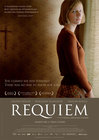
Film: Dir. Hans-Christian Schmid - Requiem

Dir. Hans-Christian Schmid
Requiem

[Horror / Drama]


Before anything is said about this movie I ought to make one thing clear: Requiem is not The Exorcist. While the film does focus on the idea of demonic possession, no-one sucks anything in hell, crucifixes are only used for religious ecstasy and, as far as I can tell, nothing juicy goes up anyone's ass. That is not to say Requiem isn't creepy - it most definitely is - but in a markedly different way to its forebear. Thankfully, it opts not to pursue the needlessly shlocky route popularised by recent teen slashers either, preferring to spook the audience with a brooding, sophisticated horror.

Those who remember 2005's The Exorcism of Emily Rose will be familiar will the premise, as both movies are loosely based on the life of Annaliese Michel - a girl who underwent a much-publicised, real-life exorcism in 1975. However, whereas ...Emily Rose chose to glorify the frights and was "based on real events" in the traditional American sense (i.e. not at all), Requiem is a relatively subdued and slow-burning affair.

It has that familiar European indie feel whereby people talk, talk some more and occasionally shout at each other. Every upbeat moment is short-lived; immediately followed with a depressing revelation. Extended silences allow the viewer time for philosophical reflection. Fortunately, though, the strength of the acting performances is such that Schmid just about pulls it off. Most of the main cast manage that laid-back, everyday mood that, ironically, requires a great deal of effort to portray convincingly.

Notable, too, are the scenes in which Michaela appears to be possessed, which achieve an equally mundane yet compellingly voyeuristic atmosphere. Sandra Huller throws herself about, wailing miserably and covering her ears, but the audience sees nothing. Is the possession real, or just a figment of the girl's imagination? That, thankfully, is never explained, leaving open a teasing ambiguity to ensure Requiem creates a lasting impression.

While the film's sense of style and setting is commendable, clumsy characterisations are commonplace and undermine much of the artistic complexity. A cinema brochure boasted that Requiem "avoids any of the easy clichés about religion", but the strict/liberal parent archetype is one among many instances that suggest otherwise. Michaela's mother (Imogen Kogge) is the stereotypically dogmatic parent while her father (Burghart Klaussner) is prepared to reconcile his daughter's hedonistic lifestyle. Marriage difficulties and dramatic tension predictably ensue, though Kogge's stony glares and heartless indignations are uncompromisingly mean. Likewise, the idea of a streetwise friend liberating the sheltered central character is nothing new. Is it even worth mentioning the creepily sincere yet slightly sinister vicar that ticks all the usual boxes? Only Michaela's boyfriend Stefan (Nicholas Reinke) is a believable portrait, echoing our incredulity as the madness unfolds around him.

All in all, Requiem convincingly portrays the chain of events which perpetuate Michaela's decision to pursue exorcism. While its social commentary is perhaps a little weak (blind faith is bad, people!), it effectively combines carefully plotted, believable settings with an deliberately lo-fi feel. Credit is due, then, for displaying such extraordinary events so convincingly. Where ...Emily Rose went for shocks, this will make you shudder. 77

Saturday, December 16, 2006

Film: Dir. Nicholas Hytner - The History Boys

Dir. Nicholas Hytner
The History Boys
[Comedy]


Of all the popular British pastimes, smugly celebrating the supposed majesty of British comedy has to be among the most lamentable. Because we "get" irony and Americans don't, it's acceptable in Britain to make offensive jokes under the pretence of satire. For example, a Jew portraying Arabs as racist, homophobic and misogynistic is funny. Blacking-up and stereotyping black women is funny. Pretending that Asian women are incomprehensible is funny. I thought the dark days of Mind Your Language and Love Thy Neighbour were behind us, but a quick glance at mainstream British comedy suggests otherwise. Come on faithful TV, how long before Roy "Chubby" Brown gets his own Friday night sketch show?

Aside from the latent mainstream racism, supposedly "alternative" British comedy is also decidedly unfunny. Though a handful of shows have slipped shyly by with impotent mediocrity (Green Wing, The IT Crowd, Mitchell & Webb), we have also seen some of the worst "comedy" of all time. Hyperspace, for example, managed to get commissioned despite an unfunny premise, few recognisable jokes and that fat girl who's funny because she's fat and doesn't mind jokes about how she's fat so it makes her funny.

Elsewhere, Time Trumpet recently proved that Armando Iannucci is well past his sell-by date, and The Thick Of It almost defies description - never did I believe that a series could be considered amusing through the sad, desperate repetition of single four-letter word. Maybe it's fucking just fucking me, but I can't fucking understand why the fuck British fucking comedy is fucking considered so fucking better than its American counterpart.

Which, incidentally, brings us on to The History Boys - Nicholas Hytner's recent adaptation of the successful Alan Bennett play. The film follows a class of boys at a Sheffield school as they attempt to gain entry to Cambridge University. After successful A-level results, they return to school in order to perfect their interview routine under the watchful eye of teacher and part-time paedophile Hector (Richard Griffiths). Everything proceeds in a safe, light-hearted fashion with all the upper-middle class, tea and biscuit jokes that underline the insipid banality of recent British comedy.

The collection of characters is almost embarrassing in its absurd representation of every section of society; there's the black one, the Asian one, the fat one, the gay one, the foppish one, the laddy one, the dopey one and the working-class one - a strangely cosmopolitan bunch for a mid-80s South Yorkshire comprehensive. This aside, the film isn't actually very funny and didn't produce a single hearty laugh in the screening I saw. It occasionally considers issues of repressed homosexuality and the public perception of paedophilia, but this is largely superfluous (and unintentionally ironic) considering the appalling stereotypes on which the rest of The History Boys is based.

There is nevertheless a single, ten-minute section of the film, conducted entirely in French, which amused me. Recalling similar lessons experienced at school, the class attempt to perform a play in the language, stumbling over certain words and acting out the more difficult ones. The characters' Anglicisation of the language was excellent, and the slapstick accompaniment was similarly enjoyable.

The rest of the film plays on the tired notion of "aren't national eccentricities like soooo funny??!!" and suffers dreadfully as a result. The actors all do their respective stereotypes justice, but that only serves to emphasise the lifelessness of the script. However, given the recent state of British comedy, one laugh is probably above average and something for which the film makers should be commended. Oh and extra marks for putting the superb Clash instrumental "Mustapha Dance" on the soundtrack. 27


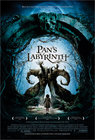
Film: Dir. Guillermo del Toro - El Labyrinto del Fauno

Dir. Guillermo del Toro
El Labyrinto del Fauno
[Fantasy]


Guillermo del Toro's fairytale epic combines beauty, elegance, wonder, terror, sadness and hope in a way I never thought possible. Not only is it the best release of 2006, it is a compelling masterpiece and one of the greatest movies of recent times.

Set against the backdrop of the Spanish Civil War, El Labyrinto del Fauno follows the story of a young girl named Ofelia (Ivana Baquero) who, ignoring the wishes of her murderous and brutal step father, Captain Vidal (Sergi Lopez), follows a fairy into the woods and happens upon a forgotten labyrinth. Its inhabitant, a faun named Pan (Doug Jones), reveals that Ofelia is the long-lost princess of an ancient kingdom and must complete three tasks in order to return to her despairing family.

Though the plot of the film may appear derivative, it is the way in which El Labyrinto del Fauno is presented, acted and constructed which makes it so special. It is visually stunning from beginning to end, effortlessly juxtaposing grim, war-torn environments with inspired fantasy settings. The actors all give flawless performances, especially Lopez who, despite playing a deranged sadist for the most part, succeeds in exposing his character's hidden fragility as forgotten secrets begin to emerge. In fact, all of the main characters are given space to develop and do so accordingly - Ofelia's wide-eyed acceptance is soon riddled with suspicion and even Vidal's doctor is forced to reassess his loyalties.

El Labyrinto del Fauno is tough, violent and occasionally terrifying - certainly not characteristics of a traditional fairytale. However, what del Toro manages to capture so majestically is the essence of what makes the form so successful; the fact that this occurs in such a mature setting is testament to the man's ability and imagination. Try to recall, if you will, your initial reaction to the tales of Goldilocks, Cinderella, Red Riding Hood et al and you'll begin to appreciate the feelings that El Labyrinto del Fauno can evoke. Believe it or not, it really is that good. 96

Wednesday, November 15, 2006

Film: Dir. Rian Johnson - Brick

Dir. Rian Johnson
Brick
[Neo-noir/School]


Rian Johnson is a film-maker with an astonishingly original vision. For eight years he laboured to assemble the small budget necessary to bring his stylised high-school detective story to the screen. The results show a confident first-time director assembling an unclassifiable, strangely intriguing film.

Brendon is a tough but honest kid who stays outside the shady drug dealings of the so-called "Upper Crust" at his california school. Taking place in a semi-fantasy vision of a school which pays homage to the classic noir films, (The Maltese Falcon, Marlowe etc.) Brendon is thrust into a world of mystery, double crosses and intrigue. The cast talk in a mesmerising dialect full of outdated or imaginary slang; it's immediately clear that this is not a film which wants to make any sort of hard-hitting point about teenage substance abuse or the like. It's purpose is simply to enertain, and perhaps make a point about how magnified in importance school life can be. The eponymous "Brick" is a solidified block of heroin - and it's at the centre of a network of double-crossings involving Brendon, femme-fatale Laura, hired muscle Tug and the sinister "pin" or kingpin of all the dealing at the school. Assisted by sage-like geek Brain, Brendon's out to find the truth about his ex-girlfriend's death. The film opens with a haunting score, reminiscent of spaghetti-westerns, as Brendon discovers her body lying dead in an evocatively shot drainage channel. Cut to a couple of days earlier, and we see Brendon receiving an impassioned call for help from Emily.

Unfortunately, it's largely downhill from there. The more the plot unravels the more confusing it becomes, due in part to the lingo, some of which proves indeciphrable; it is often not couched in enough context or spoken clearly enough to be intelligible, and ends up impeding the story. Were it not for this layer of smoke and mirrors, the cliched plot would doubtless be utterly predictable; even as confused as I was, one could smell the twists a mile off; the hero playing the villains off against each other, the inevitable backstab from a hard hearted dame, and so on. Further, whilst at best, the high-school parallels with classic noir fit nicely, some of the more obvious scenes (the interrogation by the vice principle, for example) seem rather contrived to fit with in the confines of the genre. "You've helped this office in the past" bawls the VP, and one can't help being reminded of every confrontation between a washed-up detective and the local police chief in the history of cinema. The characters, too, are halfway between caricatures and fully-realised portraits; confronted with an array of dull archetypes, the viewer is never entirely engaged. At least the music, stylish cinematography and production design manage to provoke emotion, to an extent, but this is very much a film for the head, not the heart. If Johnson's next film-school exercise in style and genre-bending can manage to speak to us emotionally, he will have made a great film. As it is, he's only written and directed a pretty decent, very unique one.

65

Friday, November 10, 2006

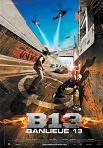
Film: Banlieue 13 (District 13) - Dir. Pierre Morel

Dir. Pierre Morel
Banlieue 13 (District 13)
[Action/Martial Arts]


Trust the french to have a martial arts film about running away.

For those unfamiliar with the sport, Parkour, or Free Running, is a physical discipline centred around the concept of using environments, in particular urban ones, as a giant adventure playground. The only objective is to start moving and to not let anything stop you, bypassing obstacles and using the environment in unusual and inventive ways. Spectacular jumps, vaults, flips, climbing, and a host of other moves comprise the visually stunning array of options a Traceur, as the participants are known, has at their fingertips.

In 2002, Luc Besson, the french action maestro behind films like The Fifth Element and Leon hit on two very simple, very good ideas. The first was to make a buddy action movie about parkour. The second was to make a near-future film in which the french government decides to cordon off entirely the most crime ridden suburbs (or Banlieue) of Paris. The result is one of the most energetic, pacey and politically relevant films for years; an action film which is both virtuoso entertainment and satire. Some critics will doubtless dismiss the political theme as heavy handed or superfluous, but if the flick was three hours long and full of symbolism, stilted dialogue and twenty second shots of coffee cups they would probably lap it up. One of District 13's chief virtues, in fact, is it's length; a svelte seventy-something minutes. It never bores, every scene is necessary and enjoyable, and the two leads, David Belle and Cyril Raffaelli, pull off convincing and likeable performances despite being Parkour/Stunt experts, not professional actors.

The plot is simple but effective; Leito (Belle) is a good guy in a bad neighbourhood; he fights against the local drug lord, Taha (played by scriptwriter Bibi Naceri) and his right hand man, K2 (Tony D'Amorio). After killing a corrupt police officer, he finds himself in jail. Damien (Raffaelli) is a police officer charged with a desperate mission; infiltrate the now closed off District 13 and recover a stolen nuke which is primed to blow. He is assigned Leito as a reluctant guide, whose sister is being kept, drugged, by Taha, and so begins the second half of the film; a non-stop orchestra of incredible stunts and fight scenes, made all the more potent by the knowledge that this film was wirework free. To detail some of the highlights; at one point Belle slides himself effortlessly in one clean jump through a tiny window above a locked door. In another, Raffaeli jumps clean over a long casino table and kicks an assailant; again, in a smooth fluid movement. In a third, the two protagonists run straight over a moving car which then crashes spectacularly. The action is the real star of the film, and the short length keeps all the in-between sequences relevant and suspenseful.

The only criticisms I can make are that Leito's sister (Dany Verrisimo) is weakly characterised and clearly a servant of the plot, that the music is all very similar, and the final revelation, whilst clever and politically charged (the french government aren't quite that bad, but they probably would if they could) doesn't quite hang together. Otherwise, this film comes highly reccommended; it's one of the most purely exhilarating films you'll see this year.


90

Wednesday, November 08, 2006

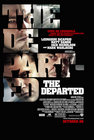
Film: Dir. Martin Scorsese - The Departed

Dir: Martin Scorsese
The Departed
[Thriller]


One the one hand, The Departed is the kind of movie that makes film makers up and down the country seeth with jealously. Every shot is exact - painstakingly crafted and costing thousands of dollars, the lead actors mostly turn in solid performances and the plot contains a suitable number of twists and turns to keep even the most ardent 24 fan on the edge of their seat. However, it is also produced so appallingly (with one of the most unsatisfying non-endings in recent memory) that any teen with a video camera will be wondering why they can't get a job in Hollywood.

The tagline is perhaps the best way to outline the plot of The Departed without giving too much away. "Cops or criminals - when you're facing a loaded gun, what's the difference?" growls Jack Nicholson in one of the movie's most memorable scenes. Nicholson plays the head of an Irish family business who want to secure a lucrative deal with the Chinese for an exchange of microchip technology. As you might expect, they also kill lots of people along the way with the help of guns, muscle (provided here by a typically gruff Ray Winstone) and sweet talking in restaurants.

However, what sets The Departed apart from run-of-the-mill cops and robbers thrillers is the much-alluded to dichotomy. You see, the cops have a rat inside the mob (a superb Leonardo Di Caprio), and the mob have a rat inside the police force (a predictable Matt Damon). Communications between the rats and their respective groups take place via numerous covert telephone conversations which arouse little or no suspicion, despite the fact that both sides know their ranks have been infiltrated.

At one point, for example, police rat Damon is caught by his boss whispering into a mobile phone and looking painfully secretive in a way that graduates of acting school really shouldn't. However, Damon simply explains that it is his mother on the line, to which his boss (Martin Sheen, still in West Wing mode) fails to react and thus refuses to pursue a blatantly unnatural situation. Nevertheless, Scorsese's direction and strong moments of dialogue ensure that such occasional blips are easily overlooked.

That is, of course, until the aforementioned car crash of an ending. While initially satisfying (for reasons which it would be inappropriate to discuss here), much of the conclusion of the film was clearly left on the cutting room floor and is extremely unsatisfactory considering the calibre of the previous 150 minutes. Loose ends are left hanging, but in a frustrating rather than intriguing manner. Furthermore, the ending does not mesh at all well with the slow, deliberate pacing of the movie.

So, though hampered by minor plot inconsistencies and a disastrous conclusion, The Departed remains a smart, funny, gripping thriller in the rightly revered Scorsese tradition. As a result, it comes highly recommended. 82


Tuesday, September 12, 2006

Film: Dir. Richard Linklater - A Scanner Darkly

Dir: Richard Linklater
A Scanner Darkly
[Sci-Fi/Thriller/Animation]


You may have heard a lot about this film's rather unique visual style. Essentially, it combines live action of actors like Keanu Reeves and Winona Ryder with real and CGI enhanced backdrops. The twist is that all this footage is then "drawn over" by a computer to look like a cartoon, in a similar method to the rotoscoping of old.

Whilst this makes all the film posters look rather beautiful, you'll likely find yourself looking straight past it within the first few minutes of the film. In stills, the actors look like well drawn cartoons of themselves. In motion, your eyes will soon begin to ignore the cartoon treatment completely.

Does this detract from the film? Not really, thankfully. Indeed, the main gain may well be that it kept the budget down to a relatively tiny three million pounds mark. And despite the fog of the graphical style, it's easy to distinguish some great acting. Keanu Reeves, famous for only being able to play a confused stoner or a zen-like super agent, gets to do both here, just like in The Matrix. He plays an undercover cop sent to infiltrate a houseful of - confused stoners. Being a Philip K. Dick plot, the story is as drug addled and enjoyably crazy as a trip without the come-down. I don't want to spoil it, but the central themes are identity and paranoia; pretty typical Dick. The supporting cast, in particular Robert Downey Jr. are also rather great; his unhinged dope fiend is both funny and terrifying.

The music also deserves a mention; as well as a specially written soundtrack, the film also features quite a bit of Musically Sound favourite Radiohead. The script adaptation does a great job of transferring the 1970s set novel to the present day without sacrificing the plot or the characters. And the direction's choice of camera angles and POV shots, and the gorgeous composition of the driving scenes, had me hooked.

As much as I like Dick, the only thing that saved me from loving this film to bits was one aspect of the plot - the stylishly animated "scrambler suit", designed to render a persons identity as a fleeting composite; simply didn't make a lot of sense; why not just use a mask and a vocoder? Still, are you expecting water-tight logic from a film about taking a lot of hallucinogens? Probably not. In all, a faithful adaptation and a great stand-alone entity in itself. 90

Tuesday, June 20, 2006

2006 - Half a year in focus

As we haven’t been around for the first half of 2006, what follows is a brief guide to the best I’ve experienced so far this year in each field of the arts.


Music:

Liars – Drum’s Not Dead
[Experimental]

Much maligned experimental trio create a concept album worthy of attention. Unlike their previous LP of noise, distortion, feedback and a bit more noise, Drum’s Not Dead has an unexpected hypnotic quality underneath the walls of percussion and falsetto wails. They even have a crack at a ‘normal’ song at the end, too! 86


Games:

The Elder Scrolls IV: Oblivion (PC, X360)
[RPG]

Yes, the battles, skill system, dialogue and story have all been dumbed down to give the series mainstream appeal, but the unexpected linearity lends the game a pace and cohesion severely lacking in Morrowind. Hundreds of side quests still exist for the determined, mind, and the depth of Oblivion is well beyond your standard GTA fare, so it should keep most purists, as well as newcomers, content. Did I mention it’s the best looking game of all time? 93


Film:

Inside Man
[Heist Thriller]

Not Spike Lee’s best but a clever, slick thriller with great performances from Clive Owen and Jodie Foster. If you don’t mind the familiar bank robbery build up in the first half hour it’s the year’s smartest mainstream release. However, with the main competition coming from the admittedly solid Wallace and Gromit it’s hardly been a fantastic year for cinema. 76


Books:

DBC Pierre – Ludmila’s Broken English
[Contemporary Fiction]
The dull shouting and screaming of the first hundred pages are rescued by
Pierre’s unique use of sublime metaphors and fluid language, and from then on the main plot manifests itself terrifically. Overlook the author’s overzealous and hammy political commentary (the Siamese twin protagonists are named Blair and Gordon…) and at times this book is a joy to read; just don’t expect Vernon God Little 2. 82